Effectively managing time across multiple projects requires a strategic approach. This comprehensive guide dives deep into the intricacies of project management methodologies, prioritization techniques, and time management strategies, equipping you with the tools and knowledge to excel in today’s demanding work environments. From understanding fundamental project management principles to mastering communication and collaboration, we’ll explore the full spectrum of techniques needed for success.
This exploration of time management for multiple projects will cover a broad range of topics, from the nuances of different project methodologies to practical tools and techniques for task management and communication. We will also address the importance of adaptability and flexibility, highlighting the critical role of managing dependencies and unforeseen challenges. By the end of this guide, you will be well-equipped to confidently navigate the complexities of managing multiple projects while maintaining a healthy work-life balance.
Understanding Project Management Principles

Effective project management is crucial for success, especially when juggling multiple projects. Understanding fundamental principles, such as project methodologies and planning techniques, empowers you to navigate complexities and achieve desired outcomes. A strong grasp of these principles allows for streamlined processes, efficient resource allocation, and ultimately, higher project completion rates.Project management methodologies offer structured approaches to project execution.
They provide a framework for defining roles, responsibilities, and timelines, facilitating the successful delivery of projects within budget and schedule constraints. Applying these methodologies, particularly when managing multiple projects, fosters consistency and predictability.
Project Management Methodologies
Project management methodologies offer various approaches to project execution. Understanding these methodologies is vital for effectively managing multiple projects. Popular methodologies include Agile and Waterfall.
- Agile methodologies prioritize flexibility and iterative development. They emphasize adaptability to changing requirements, enabling quicker responses to emerging challenges. Teams work in short cycles (sprints) to deliver functional increments of the project, facilitating continuous feedback and improvement. This approach is particularly useful when dealing with uncertain or evolving project requirements.
- Waterfall methodologies, conversely, are characterized by a sequential, linear approach. Each phase of the project must be completed before the next can begin. This structure offers clarity and predictability but may not be as adaptable to changing conditions. Waterfall is suitable for projects with well-defined requirements and stable environments.
Project Planning and Outlining
Thorough project planning is essential for managing multiple projects effectively. It establishes a roadmap for the entire project lifecycle, outlining tasks, timelines, and resources.
- Detailed project planning involves breaking down the project into smaller, manageable tasks. This process, known as work breakdown structure (WBS), defines the specific deliverables and responsibilities for each task. For example, a software development project might be broken down into modules, each with specific features and functionalities. The WBS ensures that each component is addressed and accounted for, minimizing potential omissions.
- Establishing clear timelines and milestones is crucial for tracking progress and identifying potential delays. These milestones serve as checkpoints, allowing for proactive adjustments and course correction, particularly in managing multiple projects with potentially overlapping timelines.
Importance of Clear Communication and Collaboration
Effective communication and collaboration are fundamental for success in managing multiple projects. They ensure everyone is aligned on goals, responsibilities, and expectations.
- Clear communication channels are vital for conveying project updates, progress reports, and any potential roadblocks. Regular meetings, status reports, and dedicated communication channels help keep all stakeholders informed and on the same page.
- Collaboration among team members and stakeholders is essential for seamless project execution. Encouraging open communication and knowledge sharing fosters a collaborative environment where ideas are exchanged, and challenges are addressed collectively.
Comparing Project Management Methodologies
The choice of project management methodology often depends on the specific project characteristics. The following table highlights the strengths and weaknesses of Agile and Waterfall in managing multiple projects:
| Methodology | Strengths in Managing Multiple Projects | Weaknesses in Managing Multiple Projects |
|---|---|---|
| Agile | Flexibility to adapt to changing requirements, faster delivery of smaller increments, easier to manage dependencies across multiple projects. Iterative approach allows for more frequent feedback and course correction, reducing the impact of delays or errors in one project on others. | Potential for scope creep if not managed effectively, difficulty in accurately estimating timelines for complex projects, and potential for less control over overall project deliverables. Requires highly skilled and self-organizing teams. |
| Waterfall | Clear structure and documentation, easier to allocate resources and track progress, good for projects with well-defined requirements. Easy to monitor progress across projects, as each phase has a defined end-point. | Less adaptable to changing requirements, delays in one phase can impact the entire project, making it harder to manage multiple projects with potentially overlapping deadlines. Requires careful upfront planning, and difficulties in reacting to unexpected issues that arise in subsequent stages. |
Prioritization and Task Management

Effective project management hinges on the ability to prioritize tasks and manage them efficiently. This crucial step ensures that resources are allocated appropriately, deadlines are met, and project goals are achieved. Without proper prioritization, projects can become overwhelmed, leading to delays, missed milestones, and ultimately, project failure. Understanding the various prioritization techniques and employing suitable task management methods are vital for success.Prioritizing tasks effectively involves recognizing their importance and urgency.
This understanding allows for the allocation of resources and attention to the most critical elements first, maximizing productivity and minimizing wasted effort. By employing the right tools and techniques, managers can streamline the workflow, enhance project execution, and ultimately deliver successful projects.
Prioritization Techniques
Different prioritization methods provide unique perspectives for assessing task importance and urgency. Understanding these techniques allows for a more strategic approach to task management, leading to better project outcomes. The Eisenhower Matrix, for example, categorizes tasks based on their urgency and importance, facilitating a clear roadmap for action. Another valuable tool is the Pareto Principle (80/20 rule), which highlights the disproportionate impact of a small subset of tasks on overall project success.
These principles help to focus efforts on high-impact activities.
Prioritizing Tasks Across Multiple Projects
Managing multiple projects simultaneously demands a systematic approach to prioritization. A crucial step is to define clear priorities for each project, taking into account the project’s strategic objectives and the overall organizational goals. This involves evaluating the dependencies between projects and their potential impact on each other. Effective prioritization enables managers to allocate resources and time to the most critical tasks across all projects, ensuring that crucial milestones are met and deadlines are respected.
Creating Detailed Task Lists and Schedules
Detailed task lists and schedules are essential for successful project execution. These documents provide a clear roadmap for each project, outlining individual tasks, their dependencies, and the allocated timeframes. For each project, a comprehensive list of tasks should be created, breaking down complex objectives into smaller, manageable steps. Clear deadlines should be assigned to each task, ensuring a transparent and realistic timeline.
This structure allows for better monitoring of progress and proactive identification of potential bottlenecks. Moreover, the schedules should reflect the interdependencies between tasks, highlighting critical paths and potential delays.
Realistic Deadlines and Task Estimations
Realistic deadlines and accurate task estimations are paramount for effective project management. Overly ambitious deadlines can lead to stress, rushed work, and ultimately, compromised quality. Instead, realistic deadlines should be established, based on a thorough assessment of task complexity, resource availability, and potential obstacles. Similarly, precise estimations for task completion time are essential for creating accurate schedules.
This requires a thorough understanding of the scope of each task and the required resources. By incorporating these factors into estimations, managers can anticipate potential challenges and adjust plans accordingly. Historical data and project benchmarks are invaluable for more accurate estimations. For instance, if a similar task took 10 hours in a previous project, it’s reasonable to estimate a similar time frame for the current project.
Task Management Tools
Effective task management tools can significantly enhance project efficiency. These tools streamline task organization, communication, and collaboration, ultimately contributing to the overall project success.
| Tool | Advantages | Disadvantages |
|---|---|---|
| Asana | User-friendly interface, excellent collaboration features, customizable workflows. | Can be complex for very basic tasks, may require a learning curve. |
| Trello | Visual representation of tasks, easy to visualize progress, intuitive for team collaboration. | Limited reporting features, not as comprehensive for large-scale projects. |
| Jira | Highly customizable, robust issue tracking, strong integration with other tools. | Steeper learning curve, often overkill for smaller projects. |
| Monday.com | Versatile platform, adaptable to various project needs, good for complex workflows. | Can be overwhelming for simple tasks, might require more configuration for basic use. |
Time Management Strategies
Effective time management is crucial for successfully navigating multiple projects. It involves prioritizing tasks, allocating sufficient time, and employing techniques to optimize productivity and minimize stress. Understanding these strategies allows for better project execution and improved overall outcomes.Understanding the nuances of various time management techniques, and how they can be tailored for different project needs, is paramount. A systematic approach to time allocation is vital to ensure projects remain on track and deadlines are met.
Effective Time Management Techniques
A variety of techniques can be utilized to improve time management. Understanding their individual strengths and weaknesses is key to selecting the most appropriate methods for different situations.
- Time Blocking: This involves scheduling specific time slots for particular tasks or project phases. This provides a structured framework for allocating time, enabling better focus and preventing task overlap. It enhances productivity by minimizing context switching and maximizing concentration on a single task.
- Pomodoro Technique: This method involves working in focused intervals (typically 25 minutes) followed by short breaks. This approach promotes concentration and prevents burnout, improving overall productivity. The technique’s cyclical structure can be highly effective for repetitive tasks.
- Eisenhower Matrix: This prioritization tool categorizes tasks based on urgency and importance, helping individuals focus on high-priority tasks first. This matrix provides a structured approach to task prioritization, ensuring critical tasks receive the necessary attention.
- The Pareto Principle (80/20 Rule): This principle suggests that roughly 80% of effects come from 20% of causes. Applying this to projects allows for focusing on the most impactful tasks, which will yield significant results.
Applying Time Management Techniques to Tasks and Projects
To effectively apply these techniques, a methodical approach is required. Understanding how each method works is key to achieving optimal outcomes.
- Individual Tasks: For individual tasks, time blocking can be employed to allocate specific time slots for completion. The Pomodoro Technique can help maintain focus during these blocks. Prioritize tasks using the Eisenhower Matrix to ensure that high-priority items are addressed promptly.
- Entire Projects: For entire projects, a comprehensive project plan is essential. Time blocking can be used to schedule project phases and milestones. The Pareto Principle can be applied to identify the most impactful project deliverables, ensuring that critical components receive adequate attention. The Eisenhower Matrix can help prioritize project tasks.
Comparing Time Management Approaches for Multiple Projects
Managing multiple projects requires adapting time management approaches. Recognizing the strengths and weaknesses of each method is vital to optimal performance.
- Time Blocking works well for structured projects with defined phases, but can be less flexible for dynamic projects.
- The Pomodoro Technique is particularly useful for focused tasks, but may not be ideal for projects with a significant amount of context switching.
- Eisenhower Matrix facilitates task prioritization, but its effectiveness hinges on accurate estimations of task importance and urgency.
- Pareto Principle assists in identifying key deliverables, but it’s essential to correctly identify the critical 20%.
Allocating Time for Tasks Across Multiple Projects
Effective time allocation across multiple projects requires careful planning and prioritization.
- Prioritization: Prioritize tasks based on urgency, importance, and project deadlines. High-priority tasks should be assigned more time.
- Project Dependencies: Consider dependencies between tasks within different projects when allocating time. Ensure tasks in one project do not conflict with critical tasks in another project.
- Timeboxing: Allocate specific time slots for different projects and tasks within each project.
- Flexibility: Build some flexibility into the schedule to account for unexpected delays or changes in priorities.
Table of Time Management Strategies
| Time Management Strategy | Pros | Cons |
|---|---|---|
| Time Blocking | Structured approach, improves focus, reduces context switching. | Less flexible for dynamic projects, can lead to rigidity. |
| Pomodoro Technique | Promotes concentration, prevents burnout, enhances focus. | Less suitable for complex tasks, may not fit all project needs. |
| Eisenhower Matrix | Prioritizes tasks effectively, improves focus on critical tasks. | Requires accurate estimations of urgency and importance, can be time-consuming. |
| Pareto Principle | Identifies key deliverables, focuses on impactful tasks. | May overlook less impactful tasks, needs accurate identification of critical 20%. |
Tools and Technologies for Project Management
Effective project management relies heavily on the right tools and technologies. Choosing and implementing appropriate software solutions streamlines workflows, enhances communication, and facilitates the successful completion of projects. This section explores the benefits of project management software, its use in tracking progress and managing tasks, its communication features, and offers a selection of popular tools for managing multiple projects.Project management software provides a centralized platform for organizing and tracking tasks, deadlines, and resources.
This centralized approach is crucial for coordinating multiple projects, ensuring timely completion, and preventing overlap or conflicts between tasks. Utilizing these tools efficiently allows for a more structured and controlled project lifecycle.
Benefits of Project Management Software
Project management software offers numerous benefits for managing multiple projects. These tools provide a visual representation of project progress, enabling managers to quickly identify bottlenecks and take corrective action. Centralized task management reduces the risk of missed deadlines or duplicated efforts. Effective communication channels facilitate collaboration and transparency among team members. Real-time updates and reporting capabilities enhance accountability and decision-making.
Furthermore, software solutions offer features to automate tasks, improving efficiency and freeing up valuable time for strategic decision-making.
Utilizing Project Management Software for Task Management
Project management software facilitates efficient task management across multiple projects. Features like task assignment, due dates, and progress tracking provide a clear overview of project status. Software often allows for sub-tasking, enabling breakdown of complex tasks into smaller, more manageable components. This hierarchical structure promotes accountability and allows for tracking individual contributions within a larger project. Collaboration tools integrated into the software enhance team communication and streamline feedback mechanisms.
Features for Effective Communication
Effective communication is critical for successful project management, particularly when managing multiple projects. Project management software provides various features to facilitate communication. These tools often include integrated messaging systems, allowing real-time communication between team members. Features like shared documents, collaborative editing, and discussion forums encourage information sharing and transparency. Automated notifications ensure that relevant team members are promptly updated on project progress and changes.
These features are crucial for maintaining clear lines of communication across different projects.
List of Project Management Software
Several project management software options are available, each with its strengths and weaknesses. Choosing the right software depends on the specific needs and scale of your projects. A thorough evaluation of available tools is essential for successful implementation.
- Asana
- Trello
- Jira
- Monday.com
- Microsoft Project
- ClickUp
Comparison of Project Management Software
The table below provides a comparative overview of different project management software and their suitability for managing multiple projects. Consider the specific features and capabilities when evaluating a software solution for your organization.
| Software | Key Features | Suitability for Multiple Projects |
|---|---|---|
| Asana | Task management, project planning, collaboration, reporting | High – Excellent for managing multiple projects with clear task assignments and progress tracking. |
| Trello | Visual task boards, Kanban-style workflow, collaboration | Moderate – Effective for smaller-scale projects or projects with visual task management needs. |
| Jira | Issue tracking, agile project management, robust reporting | High – Ideal for complex projects and organizations utilizing agile methodologies. |
| Monday.com | Project management, task management, customizable workflows, integrations | High – Offers customizable templates and integrations, suitable for managing diverse project types. |
| Microsoft Project | Detailed project planning, scheduling, resource management | High – Well-suited for large-scale projects with complex dependencies and resource allocation requirements. |
| ClickUp | All-in-one platform, task management, collaboration, customizable workflows | High – Provides comprehensive features and flexibility for managing multiple projects effectively. |
Communication and Collaboration Techniques
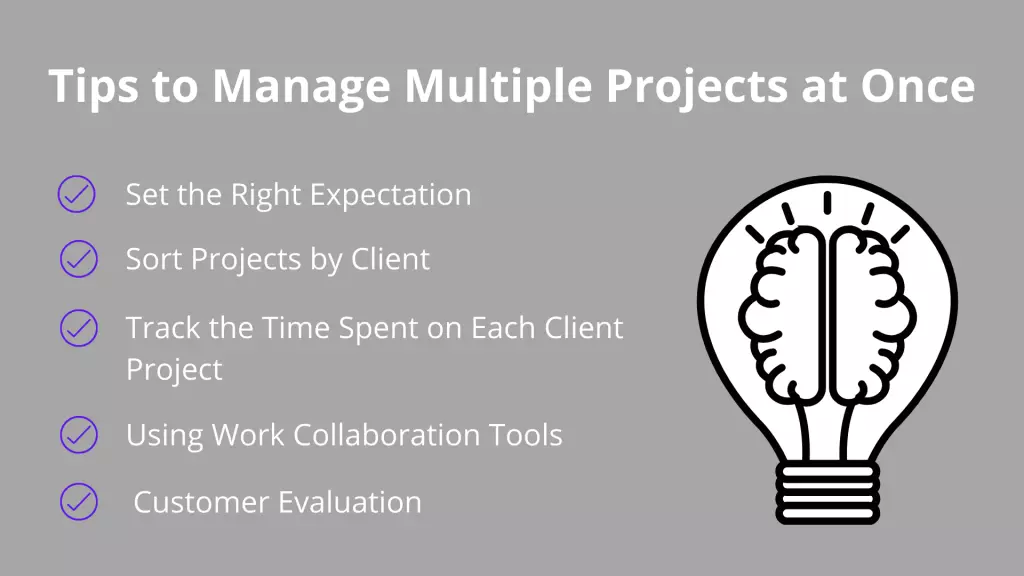
Effective communication and collaboration are critical for success in managing multiple projects. Teams working on concurrent projects need clear channels, consistent updates, and proactive conflict resolution to ensure everyone is on the same page and projects remain on track. Without robust communication strategies, misunderstandings can easily escalate, impacting deadlines and overall project quality.Maintaining open lines of communication and fostering a collaborative environment is essential to navigate the complexities of managing multiple projects simultaneously.
Clear expectations and a shared understanding of roles and responsibilities, communicated through various channels, will facilitate a smoother workflow and reduce potential conflicts. Regular communication ensures everyone is informed about project progress, challenges, and potential roadblocks.
Effective Communication Strategies for Teams
Effective communication strategies are essential for coordinating and synchronizing team efforts across multiple projects. Clear and concise communication ensures that all team members are on the same page, reducing ambiguity and potential errors. Regular updates, using various methods, foster a shared understanding of project progress and any encountered issues. This proactive approach helps teams make informed decisions and adjust plans as needed.
Importance of Regular Meetings and Progress Reports
Regular meetings, both formal and informal, play a crucial role in project management. Formal meetings, scheduled at set intervals, provide structured time for discussing project progress, identifying potential roadblocks, and making necessary adjustments. Progress reports, both verbal and written, serve as a formal record of the current status of each project. These reports can be tailored to specific stakeholders, ensuring everyone receives the relevant information.
They provide a tangible record of achievements and setbacks, allowing for tracking and future planning.
Methods for Resolving Conflicts and Addressing Challenges
Conflict resolution is an integral part of project management, particularly when dealing with multiple projects. Understanding the root causes of conflicts is crucial for finding effective solutions. Open communication channels, facilitated by team meetings, allow for the constructive expression of differing viewpoints and the exploration of potential solutions. Effective leadership, equipped with conflict resolution skills, can guide teams toward amicable resolutions and minimize disruptions to project timelines.
Role of Clear Documentation in Managing Multiple Projects
Comprehensive documentation is critical for managing multiple projects effectively. Detailed project plans, including timelines, budgets, and responsibilities, provide a shared understanding of each project’s scope. Clear documentation of decisions, changes, and communications ensures that all stakeholders are aware of updates and maintains transparency. This documentation facilitates tracking of progress and allows for future reference and learning. Well-maintained project documentation is invaluable for project closure and future planning.
Communication Channels and Effectiveness
Appropriate communication channels significantly impact project management efficiency. Choosing the right channel for a particular message ensures it reaches the intended recipient effectively and efficiently. This table Artikels various communication channels and their suitability for managing multiple projects:
| Communication Channel | Effectiveness for Multiple Projects | Suitability |
|---|---|---|
| Face-to-Face Meetings | High | Crucial for complex discussions, conflict resolution, and team building. |
| Video Conferencing | High | Effective for remote teams and large-scale discussions, but may not be ideal for quick updates. |
| Moderate | Suitable for formal updates, task assignments, and project documentation. | |
| Instant Messaging | High | Ideal for quick questions, status updates, and informal communication. |
| Project Management Software | Very High | Facilitates task management, communication, and progress tracking across multiple projects. |
| Shared Document Platforms | High | Essential for collaborative document editing and knowledge sharing. |
Adaptability and Flexibility
Project management is not a static process; projects constantly evolve, requiring proactive adaptation to unexpected changes. Flexibility is crucial for successfully navigating these shifts and ensuring project completion within acceptable parameters. Understanding how to adjust plans and strategies in response to evolving circumstances is paramount to success in managing multiple projects simultaneously.Effective project management necessitates a willingness to adapt and adjust strategies as projects unfold.
Unforeseen challenges and changes are inevitable, and the ability to respond to them with agility and resilience is essential. This involves not just modifying tasks and timelines but also reassessing priorities, resources, and communication strategies. Maintaining a balance between project demands and personal well-being is equally important, requiring a thoughtful approach to workload management and stress mitigation.
Adjusting Plans and Strategies
Adaptability in project management requires a proactive approach to change. Projects rarely proceed exactly as planned. Unforeseen circumstances, such as resource constraints, scope creep, or technological disruptions, can significantly impact project timelines and budgets. Agile methodologies, for example, embrace change and allow for iterative adjustments to the project plan. This proactive approach enables teams to adapt more efficiently to emerging issues.
Responding to Unexpected Changes and Challenges
A crucial aspect of adaptability is the ability to respond effectively to unforeseen changes and challenges. These challenges can range from technical difficulties to unforeseen delays in supply chains. A proactive approach involves regularly assessing project progress against the plan and identifying potential risks. This early identification allows for the implementation of contingency plans and proactive adjustments to mitigate potential negative impacts.
Having a well-defined risk management strategy in place is essential to navigating unexpected roadblocks. For instance, if a key team member leaves, a backup plan for knowledge transfer and task delegation should be readily available.
Maintaining Balance Between Project Demands and Personal Well-being
Managing multiple projects simultaneously can be demanding, often requiring long hours and intense focus. Maintaining a healthy work-life balance is critical for sustained performance and avoiding burnout. Prioritizing tasks, setting realistic deadlines, and delegating responsibilities effectively can significantly reduce the workload. Regular breaks, a structured schedule, and adequate sleep are essential for preserving well-being.
Adapting Time Management Strategies
Time management strategies need to be flexible and adaptable. Techniques like time blocking, the Eisenhower Matrix (urgent/important), and Pareto Principle (80/20 rule) can be adjusted to accommodate changing priorities. For example, if a critical task emerges that demands more time, other tasks might need to be temporarily deprioritized or delegated. A project management tool that allows for dynamic adjustments to timelines and tasks can prove beneficial.
Examples of Adapting Time Management Strategies
Consider a scenario where a crucial component for a project is delayed. A well-defined contingency plan could involve identifying alternative suppliers, expediting the procurement process, or re-evaluating project milestones. Similarly, if a project member experiences an unexpected personal issue, adjusting the workload and providing support is vital to maintaining team morale and productivity. This might involve re-allocating tasks or providing additional training to ensure a smooth transition.
Common Project Challenges and Potential Solutions
| Challenge | Potential Solution |
|---|---|
| Unexpected delays in materials or resources | Establish contingency plans with alternative suppliers or resources. Monitor lead times closely and proactively communicate potential delays to stakeholders. |
| Scope creep | Define clear project scope and requirements upfront. Establish a formal change management process for any scope modifications. Regular communication with stakeholders is essential to keep them informed about changes and their potential impact. |
| Lack of resources | Prioritize tasks and delegate responsibilities effectively. Explore alternative resources if necessary. |
| Communication breakdowns | Establish clear communication channels and protocols. Regular project meetings and updates can help prevent misunderstandings. |
| Conflicting priorities | Use prioritization matrices to evaluate tasks based on their urgency and importance. Communicate priorities clearly with all stakeholders. |
Managing Multiple Project Dependencies

Effective project management necessitates a thorough understanding of interdependencies between projects. Recognizing and proactively managing these dependencies is crucial for maintaining project timelines, resource allocation, and overall success. Ignoring these connections can lead to unforeseen delays and conflicts, impacting the entire portfolio of projects.Understanding project dependencies involves identifying how one project’s success or failure can affect others. This includes evaluating shared resources, deliverables, timelines, and potential risks.
By anticipating these potential impacts, project managers can develop strategies to mitigate challenges and maintain project momentum.
Identifying Project Dependencies
Identifying project dependencies requires a careful analysis of project plans and objectives. This includes examining project schedules, resource allocation, and potential overlaps in deliverables or timelines. A holistic view of the entire project portfolio is essential for recognizing these connections. For instance, a marketing campaign project might depend on the successful completion of a website redesign project.
Similarly, a new product launch might depend on the availability of a specific component produced by another team.
Managing the Impact of Dependencies
Dependencies significantly influence project timelines and resource allocation. A delayed dependent project can cascade through the entire portfolio, potentially pushing back deadlines and impacting other projects reliant on its output. For example, if a software development project is dependent on a database migration project, a delay in the database migration will undoubtedly delay the software development. Efficient resource allocation becomes crucial to handle the demands of interdependent projects.
Resources may need to be shifted or reallocated to prioritize projects with critical dependencies.
Proactive Conflict Resolution Strategies
Potential conflicts arising from dependencies can be addressed proactively through careful planning and communication. Regular meetings between project managers to discuss dependencies and potential roadblocks are crucial. This allows for early identification and mitigation of potential issues. Transparent communication channels between teams involved in interdependent projects are critical. Establishing clear communication protocols can minimize misunderstandings and foster collaboration.
Strategies for Mitigating Delays
Several strategies can help mitigate delays caused by dependencies. These include contingency planning, buffer periods in project timelines, and proactive risk assessment. For instance, incorporating buffer periods into project schedules can provide a safety net against unforeseen delays. Additionally, a thorough risk assessment can identify potential dependencies and potential delays. Developing contingency plans for each dependency is also an important measure.
This allows for a backup plan in case of delays.
Table of Potential Dependencies and Management Strategies
| Project A | Project B | Dependency Type | Management Strategy |
|---|---|---|---|
| Website Redesign | Marketing Campaign | Project B depends on Project A’s completion of the new website. | Establish clear milestones and deadlines for the website redesign. Ensure seamless handover of the redesigned website to the marketing team. |
| Database Migration | Software Development | Project B depends on Project A’s successful database migration. | Develop a detailed migration plan. Conduct thorough testing and validation of the migrated database. Allocate buffer time in the software development schedule. |
| Component Production | New Product Launch | Project B depends on Project A’s timely component production. | Establish clear communication channels between production and launch teams. Monitor production progress closely. Develop alternative component sourcing options as contingency plans. |
Final Wrap-Up
In conclusion, managing multiple projects effectively involves a multifaceted approach that integrates sound project management principles, robust time management strategies, and effective communication and collaboration techniques. By understanding the interplay of these elements, you can optimize your workflow, minimize potential conflicts, and ultimately achieve greater success in managing your projects. Remember that adaptability and flexibility are key to navigating unexpected changes and challenges.
This guide provides a robust framework to help you succeed in your project management endeavors.