Crafting a weekly schedule aligned with business objectives is crucial for success. This guide provides a comprehensive framework for defining goals, prioritizing tasks, and scheduling time blocks effectively. By incorporating flexibility and utilizing appropriate tools, you can optimize your workflow and achieve significant progress towards your business targets.
This comprehensive guide will walk you through the process of creating a weekly schedule tailored to your business goals. From defining SMART goals and prioritizing tasks, to scheduling time blocks and incorporating flexibility, this resource will equip you with the knowledge and tools necessary for success.
Defining Business Goals
Defining clear and measurable business goals is crucial for effective planning and achieving desired outcomes. A well-defined goal provides a roadmap for decision-making, resource allocation, and progress tracking. A weekly schedule, built around these goals, ensures focused effort and efficient use of time.
Types of Business Goals
Understanding the different types of business goals allows for a more comprehensive and targeted approach to planning. These goals often intersect and support one another.
- Marketing Goals: These focus on increasing brand awareness, attracting new customers, and driving engagement with existing customers. Examples include increasing website traffic, social media followers, or lead generation.
- Sales Goals: These center on boosting revenue, increasing conversion rates, and improving customer satisfaction. Examples include achieving a specific number of sales within a time frame or increasing average order value.
- Operational Goals: These involve streamlining processes, improving efficiency, and reducing costs. Examples include improving production output, reducing waste, or optimizing supply chain management.
- Financial Goals: These relate to achieving specific financial targets, such as increasing profit margins, reducing debt, or improving cash flow. Examples include increasing revenue by a certain percentage or reducing operational expenses.
- Customer Service Goals: These aim to enhance customer satisfaction, improve response times, and resolve issues effectively. Examples include improving customer satisfaction scores or reducing customer complaints.
Importance of SMART Goals
SMART goals are essential for creating a successful weekly schedule. They ensure that objectives are clear, achievable, and measurable.
“SMART goals are Specific, Measurable, Achievable, Relevant, and Time-bound.”
Their importance stems from the clarity and focus they provide, enabling more effective and targeted efforts. Vague or unquantifiable goals lead to less focused work, making it harder to assess progress.
Breaking Down Large Goals into Weekly Tasks
Large business goals often require a breakdown into smaller, actionable weekly tasks. This segmentation allows for a more manageable approach to achieving larger objectives.
- Identify Key Activities: Determine the key activities necessary to achieve the goal. This might involve research, planning, or implementation.
- Set Weekly Priorities: Based on the key activities, prioritize the tasks to be completed each week. Focus on the tasks that will yield the most progress towards the overall goal.
- Allocate Time: Assign specific time slots to each weekly task in your schedule to ensure that you maintain focus and avoid getting bogged down.
- Assign Responsibilities: If necessary, assign specific tasks to individuals within the team to ensure accountability and effective workflow.
Quantifying and Measuring Progress
Quantifying and measuring progress is essential to monitor the effectiveness of your weekly schedule. This enables adjustments and improvements in future weeks.
- Establish Metrics: Define clear metrics to track progress towards each weekly goal. This could include the number of leads generated, sales made, or customer satisfaction ratings.
- Track Progress Regularly: Regularly monitor progress against established metrics. This helps to identify areas where you need to adjust your strategy or allocate more resources.
- Analyze Results: Analyze the results of your weekly efforts to identify trends and patterns. This helps to understand what’s working and what needs improvement.
Short-Term vs. Long-Term Goals
A clear understanding of the distinctions between short-term and long-term goals helps in effectively scheduling and prioritizing tasks.
| Characteristic | Short-Term Goals | Long-Term Goals |
|---|---|---|
| Timeframe | Weeks or months | Years or more |
| Focus | Immediate actions and deliverables | Strategic direction and overall vision |
| Impact | Incremental progress towards long-term objectives | Significant transformation and sustainable growth |
| Examples | Increasing website traffic by 15% this quarter, closing 5 new deals this month | Launching a new product line within 3 years, achieving a 20% market share within 5 years |
Identifying Weekly Priorities
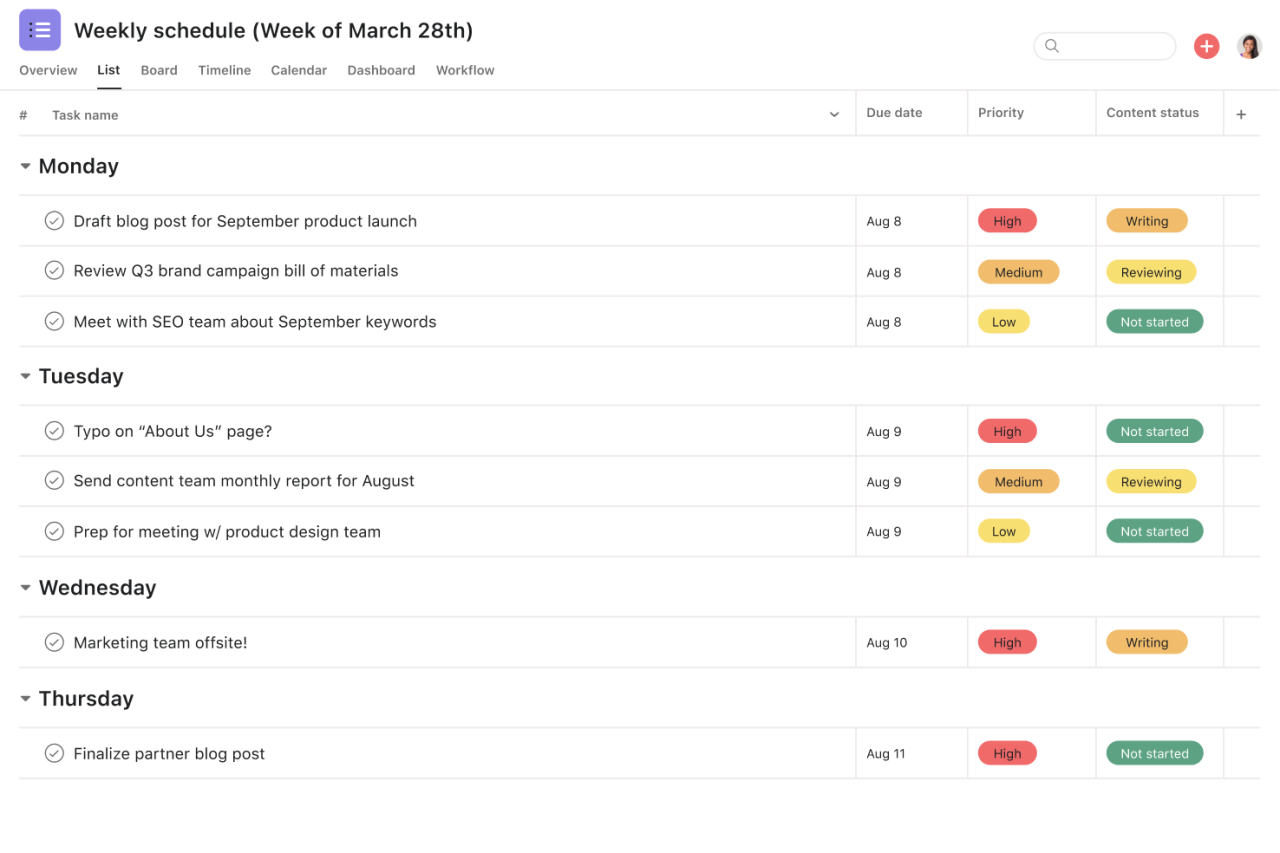
Effective business planning hinges on identifying and prioritizing tasks crucial to achieving weekly objectives. A well-defined weekly schedule allows for focused effort, minimizing wasted time and maximizing productivity. This section will delve into frameworks for identifying critical tasks, prioritizing them based on urgency and importance, and optimizing workload for a productive week.A clear understanding of weekly priorities is paramount for achieving business goals.
Proper prioritization ensures that efforts are directed toward the most impactful tasks, leading to better results and increased efficiency. This process, when integrated into a comprehensive workflow, ultimately drives sustained success.
Task Prioritization Frameworks
Prioritization frameworks offer structured approaches to identifying and ranking tasks. These methods help determine which tasks demand immediate attention and which can be scheduled for later. Effective prioritization is key to a successful week, ensuring that time and resources are allocated efficiently.
- The Eisenhower Matrix, also known as the Urgent-Important Matrix, categorizes tasks based on urgency and importance. This framework helps in distinguishing between tasks requiring immediate action (urgent and important), those that can be delegated or scheduled (important but not urgent), time-wasters (urgent but not important), and tasks that can be eliminated (neither urgent nor important). This structured approach to prioritization helps individuals focus on high-impact activities.
- The Pareto Principle (80/20 rule) suggests that roughly 80% of effects come from 20% of causes. This principle can be applied to task prioritization by focusing on the 20% of tasks that will yield the most significant results. By identifying and concentrating on these high-impact tasks, individuals can achieve a disproportionately large return on their efforts. This often requires a clear understanding of project goals and an ability to identify the tasks that contribute most directly to achieving those goals.
Prioritizing Tasks Based on Urgency and Importance
Understanding the urgency and importance of tasks is essential for effective prioritization. Urgent tasks require immediate attention, while important tasks contribute significantly to long-term goals. This requires a clear understanding of both short-term and long-term objectives.
- Urgent and Important tasks: These require immediate attention and contribute directly to critical goals. Examples include resolving a critical customer complaint or addressing a pressing deadline. These tasks should be handled promptly.
- Important but Not Urgent tasks: These tasks contribute to long-term goals but do not require immediate action. Examples include strategic planning, relationship building, and skill development. These tasks should be scheduled strategically within the week.
- Urgent but Not Important tasks: These tasks demand immediate attention but do not significantly contribute to long-term goals. Examples include attending to minor issues or handling interruptions. These tasks should be delegated or minimized if possible.
- Neither Urgent nor Important tasks: These tasks do not contribute to immediate or long-term goals. Examples include unnecessary meetings or time-wasting activities. These tasks should be eliminated or minimized to free up time for more important activities.
Determining Optimal Workload
Optimal workload for a productive week depends on individual capacity and the complexity of tasks. Overloading a schedule can lead to decreased efficiency and increased stress. Careful planning and realistic task estimation are key to achieving a productive work week. A balanced schedule allows for both focused work on high-priority tasks and the opportunity for breaks and reflection.
- A realistic assessment of individual capacity and the complexity of tasks is crucial for determining an optimal workload. Overestimating capacity can lead to burnout and decreased productivity.
- Prioritization, as discussed previously, plays a critical role in defining an appropriate workload. Focusing on the most important tasks, while delegating or postponing less critical ones, helps maintain a healthy workload balance.
Task Management Techniques
Different task management techniques offer various approaches to organizing and tracking tasks. Choosing a technique that aligns with individual preferences and workflow can enhance productivity.
| Technique | Description |
|---|---|
| To-Do Lists | Simple lists of tasks to be completed. |
| Gantt Charts | Visual representation of tasks and their timelines. |
| Kanban Boards | Visual representation of workflow stages and task progress. |
| Project Management Software | Specialized software for complex projects with features like task assignment, deadlines, and collaboration. |
Scheduling Time Blocks
Effective time management is crucial for achieving business goals. Allocating specific time blocks for tasks enhances focus and productivity, leading to better outcomes. By scheduling dedicated periods for various activities, you create a structured framework for completing work efficiently and minimizing distractions.A well-defined weekly schedule, utilizing time blocks, provides a clear roadmap for your week, making it easier to prioritize tasks and allocate appropriate time resources.
This structured approach enhances accountability and ensures that essential activities receive the attention they deserve.
Benefits of Allocating Time Blocks
Time blocks help maintain focus by isolating specific tasks within designated periods. This prevents multitasking, which can lead to decreased efficiency and diminished quality of work. Consistent use of time blocks also fosters better time management skills, improving productivity and reducing stress associated with last-minute tasks.
Weekly Schedule Template
A structured weekly schedule is instrumental in planning and managing your time effectively. A template using time blocks can be a valuable tool. This template should incorporate your identified weekly priorities.
Weekly Schedule Template Week of: [Date] | Time Block | Task/Priority | Status | Notes | |---|---|---|---| | 9:00 AM - 10:00 AM | Client Meeting | Scheduled | Prepare presentation materials. | | 10:00 AM - 12:00 PM | Project Planning | In Progress | Finalize project plan. | | 12:00 PM - 1:00 PM | Lunch Break | | | | 1:00 PM - 2:00 PM | Email Management | To Do | Respond to emails.| | 2:00 PM - 4:00 PM | Research & Development | To Do | Gather necessary information. | | 4:00 PM - 5:00 PM | Team Meeting | Scheduled | Discuss project progress. |
This template allows for flexibility and can be adapted to your specific needs and priorities. Remember to tailor it to your personal work style and the demands of your role.
Incorporating Buffer Time
Buffer time is essential for unexpected delays or interruptions. By incorporating buffer time into your schedule, you create flexibility and mitigate the impact of unforeseen circumstances. A well-structured schedule should anticipate potential roadblocks and incorporate buffer time to accommodate these scenarios.
For example, if a task is estimated to take 1 hour, allocating 1.5 hours can account for potential delays. This proactive approach allows for adjustments without derailing the entire schedule.
Realistic Time Estimations
Accurate time estimations are critical for a successful schedule. Underestimating task durations can lead to missed deadlines and increased stress. Overestimating, however, can lead to wasted time and a less productive schedule. To develop realistic estimations, use past experience as a guide and consider potential obstacles.
For instance, if a similar task took 2 hours previously, allocate 2 hours initially, and then adjust based on the specifics of the current task. This method allows for flexibility while maintaining a reasonable estimate.
Time Management Tools
Various time management tools are available to enhance scheduling and task management.
| Tool | Features |
|---|---|
| Google Calendar | Scheduling, reminders, integration with other Google services. |
| Trello | Task management, collaboration features, visual representation of workflow. |
| Asana | Project management, task assignment, progress tracking, collaboration features. |
| Toggl Track | Time tracking, project reporting, detailed insights into time spent on tasks. |
Choosing the right tool depends on individual preferences and the complexity of tasks. Each tool provides a different set of features, and choosing the appropriate one can enhance your productivity and efficiency.
Incorporating Flexibility

A robust weekly schedule is not a rigid framework but a dynamic tool. Flexibility is crucial for navigating the unexpected and maintaining momentum toward your business objectives. This section explores strategies for building flexibility into your schedule, enabling you to adapt to changes and achieve optimal productivity.
Successfully managing a business requires a degree of adaptability. The ability to adjust your schedule in response to unforeseen events or shifts in priorities is a key skill for effective time management. This adaptability allows for maintaining a positive trajectory toward your goals.
Strategies for Building Flexibility
Building flexibility into your weekly schedule involves proactive planning. This proactive approach reduces the impact of unexpected events. Reserve buffer time in your schedule for unforeseen circumstances or urgent tasks. This buffer time acts as a safety net, allowing for adjustments without derailing your overall progress.
- Buffer Time Allocation: Allocate specific time blocks for unexpected tasks or delays. This is not simply “extra” time, but planned time to handle interruptions and potential roadblocks. These blocks can be strategically placed throughout the week, rather than just at the end.
- Contingency Planning: Anticipate potential obstacles and create backup plans for each critical task. If a meeting runs over, what is the next step? Have a secondary approach ready.
- Prioritization Flexibility: Establish a system for quickly re-prioritizing tasks. Unexpected opportunities or urgent issues may arise. Being able to shift priorities effectively prevents tasks from falling behind.
Adapting to Unexpected Events
The ability to adapt to unexpected events is critical. A proactive approach, rather than a reactive one, is key. Regular review and adjustment are vital to maintaining a schedule that reflects current priorities.
- Regular Review: Schedule dedicated time each week to review your schedule and adjust as needed. This ensures that your schedule stays aligned with your current priorities.
- Communication and Collaboration: Maintain open communication with your team and stakeholders to promptly address changes in priorities or deadlines.
- Proactive Problem Solving: When unexpected issues arise, focus on finding solutions rather than dwelling on the problem itself. Be prepared to pivot and adjust your approach as needed.
Importance of Regular Schedule Review
Regularly reviewing and adjusting your schedule is essential for maintaining efficiency and effectiveness. This proactive approach ensures that your schedule remains aligned with your current objectives and priorities. Avoid letting your schedule become a rigid, outdated document.
- Adapting to Changes: Changes in priorities or market conditions necessitate schedule adjustments. A flexible approach allows for quick adaptation and keeps you on track.
- Tracking Progress: Regular review allows for monitoring progress toward your goals. Identify areas where you’re falling behind and make necessary course corrections.
- Maximizing Efficiency: A schedule that aligns with current priorities optimizes your time and resources, leading to improved productivity.
Managing Interruptions and Distractions
Interruptions and distractions are inevitable. Effective strategies for managing these elements are critical for staying on track. Developing a routine and clear boundaries is a fundamental part of managing interruptions.
- Dedicated Workspaces: Establish a dedicated workspace free from distractions. This designated space promotes focus and minimizes interruptions.
- Time Blocking for Focus: Schedule specific blocks of time for deep work and focused tasks, minimizing interruptions.
- Distraction-Free Techniques: Utilize techniques such as the Pomodoro method to maintain focus and minimize distractions during focused work periods.
Potential Obstacles and Strategies
| Obstacle | Strategy |
|—|—|
| Unexpected meetings | Schedule buffer time and communicate clearly with attendees. |
| Unforeseen technical issues | Have a backup plan for technology issues. |
| Procrastination | Break down large tasks into smaller, manageable steps. |
| Email overload | Establish specific times for checking email. |
| Lack of focus | Utilize techniques like the Pomodoro method or mindfulness exercises.
|
| Shifting priorities | Regularly review and adjust your schedule. |
Tools and Resources
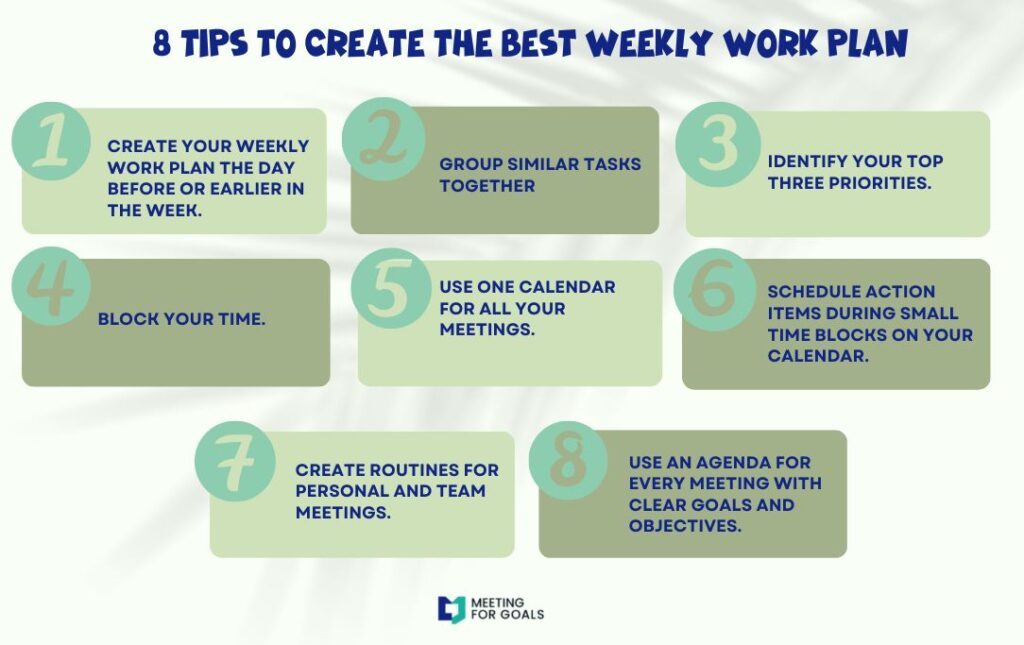
Crafting a robust weekly schedule for business goals requires effective tools and resources to streamline the process and optimize workflow. Choosing the right tools can significantly enhance productivity and allow for more efficient allocation of time towards achieving objectives. Understanding the advantages and disadvantages of different options will empower you to select the most suitable tools for your specific needs.
Leveraging digital tools for scheduling and task management provides a structured approach to planning and executing tasks. These tools offer various features, from simple calendar integrations to sophisticated project management capabilities. This allows for a comprehensive view of commitments and ensures timely completion of tasks.
Scheduling and Time Management Tools
A plethora of scheduling and time management tools are available, each with unique features and benefits. Choosing the right tool depends on individual preferences and the complexity of tasks. This section Artikels some popular options.
- Calendar Applications (e.g., Google Calendar, Outlook Calendar, Apple Calendar): These widely used tools offer basic scheduling capabilities, including creating appointments, setting reminders, and sharing schedules. Their user-friendly interfaces make them accessible for most users. However, they might lack advanced features like task management or project tracking for larger, more complex projects. Integration with other applications is often straightforward.
- Project Management Software (e.g., Asana, Trello, Monday.com): These platforms are designed for task management and collaboration. They provide more comprehensive features than calendars, allowing for task assignments, deadlines, and progress tracking. They are particularly helpful for teams or projects with multiple stakeholders. The learning curve might be steeper than for simple calendar applications.
- Time Tracking Software (e.g., Toggl Track, Clockify): These tools allow users to meticulously track time spent on various tasks. This data can be used to identify time-consuming activities and optimize workflow. The data insights provided are often valuable for understanding individual productivity patterns. Integration with other project management tools is generally available.
Comparison of Scheduling Software
Different scheduling software offers various features and functionalities, catering to different needs. A comparison table can help you evaluate the options based on your specific requirements.
| Software | Features | Advantages | Disadvantages |
|---|---|---|---|
| Google Calendar | Basic scheduling, reminders, event creation | Free, widely accessible, user-friendly | Limited task management, less suited for complex projects |
| Asana | Task management, project tracking, collaboration tools | Effective for team projects, comprehensive task management | Steeper learning curve, potential for data overload |
| Trello | Visual task management, Kanban boards, collaboration | Visually appealing, intuitive for visualizing workflows | Might be less suited for complex project structures |
| Monday.com | Project management, task management, customizable workflows | Highly customizable, extensive reporting capabilities | Complex interface for some users, potential for high initial setup costs |
Calendar Integrations for Task Management
Leveraging calendar integrations with other task management tools can streamline workflow. This approach provides a central hub for all scheduled activities, fostering a cohesive overview of commitments. This integration can improve efficiency and ensure accountability.
Importance of Digital Tools in Optimizing Workflow
Digital tools are crucial for optimizing workflow and improving efficiency. By centralizing tasks and deadlines, these tools eliminate the need for manual tracking and reduce the risk of errors. They also enable better communication and collaboration among team members. Real-time updates and shared calendars are pivotal in maintaining project momentum.
Visualizing the Weekly Schedule
![28 Free Weekly Schedule Templates [Excel, Word] - TemplateArchive](https://teknokarya.web.id/wp-content/uploads/2025/09/weekly-schedule-template-06.jpg "28 Free Weekly Schedule Templates [Excel, Word] - TemplateArchive")
A well-defined weekly schedule is crucial for effective time management and achieving business goals. Visualizing this schedule allows for better clarity, identification of potential bottlenecks, and facilitates collaboration with team members. A clear visual representation also helps track progress and adjust strategies as needed.
A visual representation of your weekly schedule makes it easier to grasp the overall picture of your work. This includes the allocation of time to various tasks, highlighting critical deadlines, and identifying potential conflicts. The visual format enables better understanding and comprehension, enhancing the effectiveness of planning and execution.
Sample Weekly Schedule
This sample schedule demonstrates a framework for visualizing your weekly tasks. It uses color-coding to differentiate task types and time blocks to allocate specific time slots.
 Weekly Schedule - [Your Name/Team Name]
-[Week of Date]

| Time Block | Task Category | Task Description | Priority | Status | Assigned To |
|---|---|---|---|---|---|
| 9:00 - 10:00 AM | Project Management | Review project progress reports | High | In Progress | John Doe |
| 10:00 - 11:00 AM | Marketing | Develop social media campaign | Medium | To Do | Jane Smith |
| 11:00 - 12:00 PM | Sales | Follow up on leads | High | Completed | David Lee |
| 12:00 - 1:00 PM | Lunch |  |  |  |  |
| 1:00 - 2:00 PM | Client Meetings | Meeting with Client A | High | Scheduled | John Doe |
| 2:00 - 3:00 PM | Administrative Tasks | Update project documentation | Medium | To Do | Jane Smith |
| 3:00 - 4:00 PM | Team Meetings | Weekly team meeting | High | Scheduled | Team |
| 4:00 - 5:00 PM | Project Management | Prepare presentation for next week's meeting | High | To Do | David Lee |
Color-Coding for Task Types
Using color-coding can significantly enhance the visual appeal and clarity of your schedule.
Different colors can be assigned to different task categories, making it easier to identify the type of task at a glance.
- High Priority Tasks: Red or Dark Orange
- Medium Priority Tasks: Yellow or Light Orange
- Low Priority Tasks: Green or Light Blue
- Meetings: Purple or Dark Blue
- Client Interactions: Pink or Light Red
Communicating the Schedule to Team Members
Effective communication of the schedule is essential for team collaboration. Team members need to understand their assigned tasks, deadlines, and any potential dependencies on others.
- Regular Updates: Schedule regular team meetings to discuss progress, address challenges, and ensure everyone is on the same page.
- Clear Communication Channels: Utilize project management tools or shared calendars to keep everyone informed about updates, changes, and deadlines.
- Visual Aids: Share visual representations of the schedule with team members to ensure everyone has a clear understanding of the workflow.
Different Schedule Presentation Formats
Different visual representations can cater to various needs and preferences. Each format offers unique advantages for understanding and managing tasks.
| Presentation Format | Description | Use Case |
|---|---|---|
| Kanban Board | A visual representation of workflow, showing tasks in different stages (e.g., To Do, In Progress, Done). | Excellent for tracking progress on projects with multiple steps. |
| Gantt Chart | A timeline-based visual representation showing task dependencies and durations. | Useful for projects with a clear sequence of tasks and deadlines. |
| Calendar | A daily or weekly view showing appointments, deadlines, and scheduled tasks. | Ideal for managing individual and team schedules. |
Example Weekly Schedules
Creating a weekly schedule is a powerful tool for maximizing productivity and achieving business goals. By tailoring the schedule to specific team roles and priorities, businesses can optimize workflow and ensure everyone is aligned with overarching objectives. The following examples demonstrate how to structure weekly schedules for different departments, showcasing flexibility and adaptability.
Marketing Team Weekly Schedule
Effective marketing strategies often require a blend of creative brainstorming, data analysis, and tactical execution. This schedule prioritizes these aspects, ensuring consistent progress across the team.
This schedule is designed for a marketing team of four, encompassing a mix of senior and junior members. The structure allows for flexibility in tasks and adaptability to changing market trends or campaign needs.
| Time | Monday | Tuesday | Wednesday | Thursday | Friday |
|---|---|---|---|---|---|
| 9:00-10:00 | Team Meeting: Strategy Review & Campaign Updates | Content Creation (Blog Post/Social Media) | Data Analysis: Campaign Performance Reporting | Client Communication (Follow-up/Feedback) | Budget Review & Reporting |
| 10:00-12:00 | Brainstorming Session: New Campaign Ideas | Social Media Management (Scheduling/Engagement) | Research/Optimization | Client Presentations/Meetings | Budget Allocation & Projections |
| 12:00-1:00 | Lunch Break | Lunch Break | Lunch Break | Lunch Break | Lunch Break |
| 1:00-3:00 | Campaign Development: Task Allocation | Creative Design for Social Media | Reporting & Analysis (KPI tracking) | Campaign Execution & Testing | Project Planning: Next Week’s Priorities |
| 3:00-4:00 | Social Media Content Scheduling | Email Marketing Campaign Preparation | Website Optimization & Analytics | Review & Feedback from Senior Team | Team Wrap-up & Preparation for Next Week |
Sales Team Weekly Schedule
A well-structured sales schedule facilitates efficient lead generation, nurturing, and conversion. This example focuses on pipeline management and strategic relationship building.
This template is for a sales team of five, assuming a diverse portfolio of clients and a range of deal sizes. It allows for adjustments based on specific client needs and individual sales quotas.
| Time | Monday | Tuesday | Wednesday | Thursday | Friday |
|---|---|---|---|---|---|
| 9:00-10:00 | Lead Qualification & Prioritization | Prospecting & Outreach | Relationship Building & Client Engagement | Follow-up & Nurturing | Sales Performance Review |
| 10:00-12:00 | Client Meeting Scheduling | Cold Calling & Email Outreach | Negotiation Preparation | Proposal Development | Sales Pipeline Review & Forecasting |
| 12:00-1:00 | Lunch Break | Lunch Break | Lunch Break | Lunch Break | Lunch Break |
| 1:00-3:00 | Client Communication & Reporting | Lead Nurturing Activities | Contract Negotiation & Closing | Follow-up & Finalization | Sales Team Meeting |
| 3:00-4:00 | Administrative Tasks & Documentation | Closing & Finalizing Deals | Preparing for Next Week’s Opportunities | Customer Relationship Management | Team Debrief & Strategy Adjustment |
Customer Service Team Weekly Schedule
A well-organized customer service schedule ensures prompt responses and efficient resolution of customer issues. This example emphasizes proactive support and continuous improvement.
This example is for a customer service team of three agents, addressing a mix of routine inquiries and complex customer issues. It accommodates adjustments for escalated cases and proactive outreach.
| Time | Monday | Tuesday | Wednesday | Thursday | Friday |
|---|---|---|---|---|---|
| 9:00-10:00 | Training & Knowledge Base Updates | Team Meeting & Problem Resolution | Customer Feedback Review | System Maintenance & Updates | Performance Review & Reporting |
| 10:00-12:00 | Handling Routine Inquiries | Addressing Escalated Issues | Proactive Customer Outreach | Handling Customer Complaints | Feedback Collection & Action Planning |
| 12:00-1:00 | Lunch Break | Lunch Break | Lunch Break | Lunch Break | Lunch Break |
| 1:00-3:00 | Troubleshooting & Support | Addressing Customer Queries | Follow-up & Support | Issue Resolution & Feedback | Knowledge Base Enhancement |
| 3:00-4:00 | Documentation & Reporting | Proactive Support Calls | Performance Monitoring & Analysis | Customer Satisfaction Surveys | Team Wrap-up & Planning |
Closing Summary
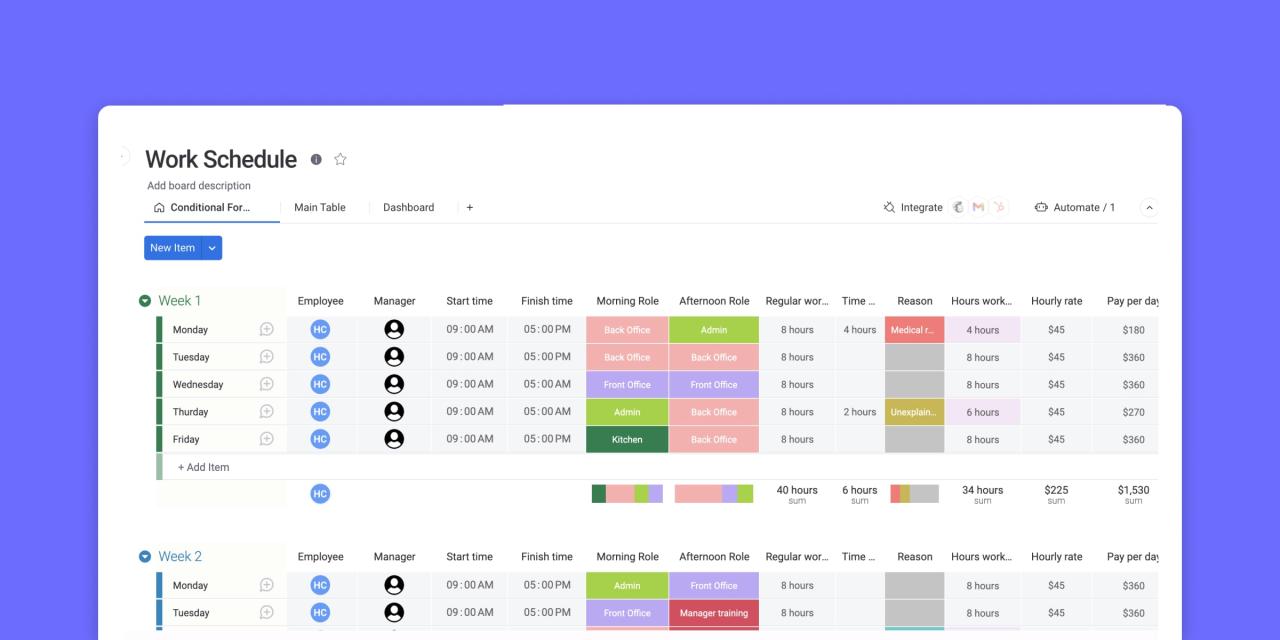
In conclusion, developing a robust weekly schedule is an essential component of achieving business goals. By defining clear objectives, prioritizing tasks, scheduling time effectively, incorporating flexibility, and utilizing appropriate tools, you can create a sustainable framework for success. This guide has provided a structured approach to this process, allowing you to tailor your weekly schedule to meet the specific needs of your business.