Time management is a crucial skill for anyone seeking to maximize productivity and achieve their goals. This comprehensive guide delves into the art of effective time management, highlighting the importance of reminders in streamlining daily routines and enhancing overall efficiency. We’ll explore various methods, tools, and strategies to help you optimize your schedule and conquer procrastination.
From understanding fundamental time management principles to implementing personalized systems, this guide offers a practical approach to transforming your daily routines. We’ll equip you with the knowledge and tools necessary to create a system that works seamlessly for you, leading to increased productivity and a greater sense of accomplishment.
Understanding Time Management
Time management is a crucial skill for achieving personal and professional goals. It involves planning, organizing, and controlling how you use your time to maximize productivity and minimize stress. Effective time management is not about squeezing more tasks into less time, but about strategically allocating time to activities that align with priorities and contribute to overall well-being. It requires conscious effort and consistent practice to cultivate.Understanding how to effectively manage your time is essential for achieving a balanced life.
It encompasses a range of techniques and strategies that allow you to prioritize tasks, set realistic deadlines, and utilize time productively. This understanding goes beyond simply scheduling appointments; it encompasses a deeper understanding of individual needs and preferences to optimize personal efficiency.
Different Approaches to Time Management
Various methods and frameworks exist for managing time effectively. Each approach has its strengths and weaknesses, making it crucial to understand the nuances of each to tailor your strategy to your individual needs.
- The Eisenhower Matrix (Urgent/Important): This method categorizes tasks into four quadrants: urgent and important, important but not urgent, urgent but not important, and neither urgent nor important. Prioritizing tasks based on these categories allows for focusing on what truly matters, delegating tasks that are urgent but not important, and eliminating time-wasting activities.
- The Pomodoro Technique: This method involves working in focused intervals (typically 25 minutes) followed by short breaks. This approach helps maintain concentration and prevents burnout by alternating between intense work periods and short rest periods. It promotes productivity by breaking down larger tasks into smaller, manageable chunks.
- Time Blocking: This technique involves scheduling specific blocks of time for particular tasks or activities. This approach promotes structure and ensures that allocated time is dedicated to essential activities, fostering better time management.
- The Pareto Principle (80/20 Rule): This principle suggests that roughly 80% of the effects come from 20% of the causes. Identifying the 20% of tasks that yield the most significant results allows for strategic prioritization, maximizing productivity, and minimizing wasted time on less impactful activities. For example, focusing on the key 20% of clients or tasks that generate 80% of the revenue or output.
Individual Time Management Styles
Recognizing and adapting to individual differences in time management styles is essential. Understanding your own strengths and weaknesses in time management allows you to leverage strengths and address weaknesses, enhancing overall efficiency.
- Some individuals thrive in structured environments with rigid schedules, while others prefer a more flexible approach. Recognizing this variation allows for creating a personalized strategy that fits individual preferences and avoids unproductive approaches.
- Understanding your energy levels and peak productivity times is crucial. Planning tasks that demand high focus during your most productive hours maximizes efficiency. Similarly, scheduling less demanding tasks during periods of lower energy can enhance overall well-being.
- Reflecting on your personal time management style, including how you approach tasks, prioritize activities, and manage interruptions, can improve self-awareness, enabling you to fine-tune your strategy to achieve desired outcomes.
Time Management and Productivity
Effective time management directly impacts productivity. A well-structured approach to time management fosters a more organized workflow, reducing wasted time and improving task completion. A proactive approach to time management helps individuals better manage their time and tasks, leading to increased productivity.
Impact of Procrastination on Time Management
Procrastination significantly hinders time management efforts. Delaying tasks leads to increased stress, decreased efficiency, and ultimately impacts overall productivity. Addressing the underlying causes of procrastination, such as fear of failure, perfectionism, or overwhelming tasks, is essential to fostering effective time management. Effective time management strategies can also help mitigate procrastination by breaking down tasks, setting realistic deadlines, and creating a supportive environment.
Effective Planning and Prioritization
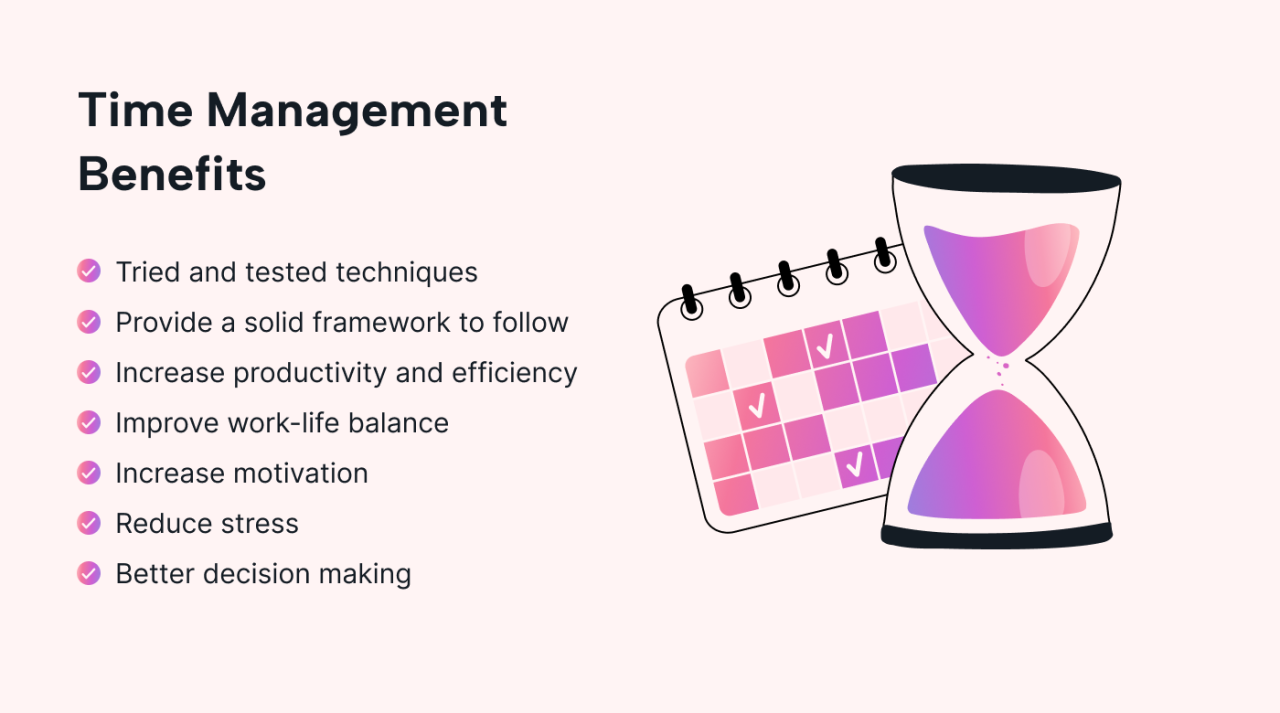
Effective time management hinges on meticulous planning and prioritization. Without a structured approach to organizing tasks and allocating time, even the most diligent individual can feel overwhelmed and unproductive. This section delves into essential strategies for creating a robust system for planning, prioritizing, and breaking down tasks, ultimately leading to greater efficiency and accomplishment.Planning and prioritization are crucial for effectively managing time.
A well-defined plan enables you to visualize your goals, allocate resources appropriately, and identify potential bottlenecks. Prioritization, in turn, helps you focus on the most critical tasks first, maximizing productivity and minimizing wasted effort.
Designing a System for Planning Tasks and Activities
A well-structured planning system is paramount for effective time management. This system should incorporate realistic time estimations to ensure tasks are completed within reasonable timeframes. A key element is to understand the realistic duration of various tasks, which can be achieved through experience, historical data, or by breaking down tasks into smaller, manageable steps. Regularly reviewing and adjusting your estimates is crucial to maintain accuracy and adaptability.
This allows for better resource allocation and prevents unrealistic deadlines.
Methods for Prioritizing Tasks
Prioritizing tasks is an essential aspect of time management. Effective methods ensure you focus on the most critical activities first. Prioritization methods often employ a combination of factors, such as urgency, importance, deadlines, and potential impact. Here are several methods:
- The Eisenhower Matrix (Urgent/Important): This method categorizes tasks into four quadrants: urgent and important (do first), important but not urgent (schedule), urgent but not important (delegate or eliminate), and neither urgent nor important (eliminate). This method helps you identify tasks requiring immediate attention versus those that can be scheduled for later.
- MoSCoW Method: This method categorizes tasks into Must have, Should have, Could have, and Won’t have. This is particularly useful when faced with limited resources or time constraints. This allows for a structured approach to prioritizing features or tasks based on their importance and necessity.
- Pareto Principle (80/20 Rule): This principle suggests that roughly 80% of the effects come from 20% of the causes. Identifying the 20% of tasks that yield the most significant results allows for a focused approach to maximize productivity.
Breaking Down Large Tasks into Smaller Steps
Large tasks can be daunting and often lead to procrastination. Breaking them into smaller, more manageable sub-tasks can significantly improve the likelihood of completion. This approach also helps track progress, provides a sense of accomplishment, and prevents feeling overwhelmed by the sheer size of the overall task.
Setting Clear Goals and Objectives
Clear goals and objectives are the cornerstones of effective time management. They provide direction and motivation, guiding decisions about task prioritization and resource allocation. Without clearly defined goals, it becomes challenging to measure progress and make adjustments as needed. Setting specific, measurable, achievable, relevant, and time-bound (SMART) goals is crucial.
Using a Planner or Calendar
Using a planner or calendar is a fundamental practice for scheduling appointments and tasks. A well-maintained planner allows for a visual representation of your commitments and deadlines, helping you visualize your schedule and allocate time effectively. This helps in identifying potential conflicts and making necessary adjustments to your plan. It also allows for a review of the schedule to ensure tasks are within realistic timeframes and adjustments can be made as necessary.
Utilizing Reminders for Enhanced Efficiency
Effective time management hinges on proactive strategies, and reminders play a crucial role in this process. By strategically utilizing various reminder methods, individuals can optimize their schedules, reduce stress, and increase productivity. Reminders act as a proactive check-in system, ensuring that important tasks are not overlooked.
Methods for Setting Reminders
Reminders can be implemented through a range of digital and physical tools. This multifaceted approach allows users to select methods that best suit their individual preferences and workflow. A combination of strategies can be highly effective in managing various tasks.
- Digital Tools: Utilizing digital calendars, to-do list apps, and smartphone reminders provides a highly adaptable and accessible system. These tools often offer features such as customizable notifications, recurring events, and integration with other applications, allowing for a streamlined approach to scheduling and task management.
- Physical Tools: For those who prefer a more tangible approach, paper calendars, sticky notes, and physical planners remain viable options. These methods can be particularly helpful for tasks that don’t require the same level of digital integration or those requiring a more visual or tactile reminder.
Comparing Reminder Types
Different reminder types cater to various needs and preferences. Understanding the strengths and weaknesses of each approach can enhance their effectiveness.
- Alarms: Auditory alarms, typically delivered through digital devices or specific hardware, are excellent for tasks requiring immediate attention or for ensuring that crucial appointments are not missed. The loudness and tone of the alarm can be adjusted to fit individual preferences.
- Notifications: Visual notifications, such as pop-up messages or banner alerts, are often preferred for tasks requiring more context or follow-up. They offer a more discreet method of prompting action, especially beneficial when working in a shared environment.
- To-do Lists: To-do lists serve as a comprehensive reminder system, visually organizing tasks and deadlines. They are highly effective for maintaining a comprehensive overview of scheduled activities and tasks.
Tailoring Reminders to Individual Needs
Effective reminders are tailored to individual preferences and workflow. This approach maximizes the effectiveness of the reminder system.
- Personalization: Users can personalize the type, frequency, and timing of reminders to optimize their efficiency. The level of detail in setting reminders is crucial for success.
- Example: An individual with a demanding schedule might benefit from setting multiple reminders for key deadlines, utilizing both visual and auditory cues. Conversely, someone with a more flexible schedule might find a single notification sufficient.
Optimal Frequency and Timing
The frequency and timing of reminders significantly impact their effectiveness. The best approach depends on the task’s complexity and importance.
- Task Complexity: Complex tasks may require more frequent reminders to maintain progress, while simpler tasks might benefit from less frequent cues. The complexity of the task is crucial for effective time management.
- Example: A lengthy project might benefit from daily progress reminders, whereas a simple task like sending an email might only require a single notification.
- Timing: Reminders should be set well in advance of the due date or appointment, allowing ample time for preparation. Timing is crucial for optimal scheduling.
Utilizing Scheduling Tools for Creating Reminders
Scheduling tools empower users to automate reminder creation and management. This approach is particularly helpful for recurring tasks and appointments.
- Scheduling Features: Many scheduling tools offer built-in reminder features, allowing users to set alarms, notifications, or email reminders for appointments or tasks. The integration of these features within the tool enhances overall effectiveness.
- Example: A project manager might use a scheduling tool to create reminders for daily project check-ins, weekly progress reports, and monthly review meetings.
Integrating Reminders into Daily Routines
Integrating reminders effectively into your daily routine is crucial for achieving optimal time management. A well-structured system allows you to stay on track, prioritize tasks, and avoid feeling overwhelmed. This approach fosters a sense of control and accomplishment, ultimately leading to increased productivity and reduced stress.Consistent use of reminders, combined with a well-defined schedule, creates a predictable and manageable environment.
This predictable structure helps you allocate time for tasks, anticipate potential bottlenecks, and adjust your plans accordingly. This proactive approach to time management is far more effective than reacting to deadlines or tasks as they arise.
Establishing a Consistent Schedule
A consistent schedule forms the bedrock of effective time management. A structured daily routine, with clearly defined blocks of time allocated to specific tasks, is essential for incorporating reminders successfully. This structured approach provides a framework for managing tasks and appointments, minimizing the need for last-minute adjustments.
- Define your daily work blocks: Allocate specific time slots for various activities, such as work, personal tasks, and breaks. For example, dedicate 9:00 AM to 12:00 PM to focused work on a specific project.
- Prioritize tasks within each block: Identify the most crucial tasks for each time slot. Use a prioritization technique like the Eisenhower Matrix (urgent/important) to ensure you address the most significant items first.
- Schedule recurring tasks: Tasks that occur regularly, like exercising or checking emails, should be included in your schedule. This consistency prevents them from slipping through the cracks.
Adjusting Reminders Based on Changing Priorities
Priorities and deadlines inevitably change. A flexible approach to reminders is essential for adapting to these shifts. Reminders should be adaptable, allowing for changes in deadlines or shifts in project priorities.
- Review and update your schedule regularly: At the beginning or end of each day, review your schedule and adjust reminders based on new information or changing priorities. This regular review allows you to stay aligned with your goals.
- Use a project management tool: A dedicated project management tool can help you visualize tasks, deadlines, and dependencies. This allows for easy updates and adjustments to your reminder system.
- Communicate changes promptly: If deadlines or priorities change, communicate these changes promptly to relevant stakeholders and adjust your reminders accordingly. This transparency helps everyone stay informed and on track.
Avoiding Reminder Overload
A deluge of reminders can be counterproductive, leading to decreased efficiency. A strategic approach to reminder usage is crucial for maximizing effectiveness.
- Use different types of reminders: Combine various reminder methods, such as calendar entries, to-do lists, and app-based reminders. This diverse approach helps avoid overwhelming yourself.
- Categorize reminders: Group reminders by project or category to organize your reminders. This organized approach helps you locate specific reminders more easily.
- Prioritize and delete unnecessary reminders: Regularly review and remove outdated or unnecessary reminders to keep your system manageable. Focus on active tasks and deadlines.
Significance of Consistency in Reminder Usage
Consistency in using reminders builds a habit of proactive time management. This habit fosters efficiency and reduces the need for constant adjustments and last-minute rushes.
- Develop a sense of routine: A consistent reminder system helps establish a sense of routine, which is crucial for productivity.
- Improved task completion: Consistent reminders increase the likelihood of completing tasks on time and reducing procrastination.
- Reduced stress and anxiety: Proactive time management, fostered by consistent reminders, minimizes the feeling of being overwhelmed by deadlines and tasks.
Overcoming Challenges in Time Management
Effective time management is not merely about scheduling tasks; it’s about navigating the inherent obstacles that can derail even the most meticulously planned routines. Understanding and proactively addressing these challenges is crucial for achieving desired outcomes and maintaining a healthy work-life balance. This section explores common impediments to effective time management, providing strategies for overcoming them.Effective time management requires a proactive approach to potential pitfalls.
By recognizing and understanding the common obstacles, individuals can develop robust strategies for maintaining focus, maximizing productivity, and adapting to unforeseen circumstances.
Common Obstacles to Effective Time Management
Recognizing the obstacles to effective time management is the first step towards overcoming them. These obstacles can range from internal distractions to external pressures. Understanding their nature allows for the development of targeted solutions.
- Distractions and Interruptions: Modern work environments are rife with interruptions, from social media notifications to unexpected phone calls. These distractions can derail focus and significantly impact productivity. Proactive strategies for minimizing interruptions are essential for efficient time management.
- Procrastination: Procrastination is a common enemy of productivity. It often stems from a fear of starting a task, feeling overwhelmed by its scope, or a lack of clear understanding of the task’s requirements. Overcoming procrastination involves a combination of techniques aimed at breaking down tasks, setting realistic goals, and building motivation.
- Multiple Tasks and Responsibilities: Juggling multiple tasks and responsibilities can be overwhelming. Efficient task management requires prioritization, delegation, and time allocation strategies that ensure each task receives the appropriate attention.
- Unexpected Events and Schedule Changes: Life is unpredictable. Unexpected events and schedule changes can disrupt even the most well-laid plans. Adaptability and the ability to adjust schedules are vital for effective time management in a dynamic environment.
Strategies for Dealing with Distractions and Interruptions
Distractions are inevitable in modern work environments. Strategies for managing them are critical to maintaining focus and productivity. Implementing these strategies can lead to noticeable improvements in time management efficiency.
- Establish Dedicated Work Zones: Creating a dedicated workspace free from distractions is a cornerstone of effective time management. A designated space minimizes interruptions and signals to the mind that it’s time to focus.
- Utilize Focus Techniques: Employing techniques such as the Pomodoro Technique or similar methods can significantly enhance concentration. These structured time blocks help maintain focus and prevent distractions from derailing progress.
- Implement Communication Protocols: Establish clear communication protocols with colleagues and team members. This ensures that interruptions are minimized during focused work periods, allowing for uninterrupted workflow.
Managing Multiple Tasks and Responsibilities Effectively
Effective task management is crucial for individuals juggling multiple responsibilities. Prioritization, delegation, and time allocation strategies are key components in maintaining balance and achieving desired outcomes.
- Prioritize Tasks Based on Importance and Urgency: Utilizing prioritization techniques, such as the Eisenhower Matrix (urgent/important), can help allocate time effectively to the most critical tasks.
- Break Down Large Tasks into Smaller Steps: Breaking down complex tasks into smaller, manageable steps can significantly reduce feelings of overwhelm. This approach makes the task less daunting and provides a sense of accomplishment as each step is completed.
- Delegate When Possible: Delegating tasks that can be performed by others can free up valuable time and allow for a focus on core responsibilities.
Overcoming Procrastination and Maintaining Focus
Procrastination is a common obstacle to effective time management. Strategies for overcoming it and maintaining focus are essential for achieving goals.
- Identify the Root Cause of Procrastination: Understanding the underlying reasons for procrastination is the first step in addressing it. Is it fear of failure, perfectionism, or something else? Identifying the root cause provides targeted solutions.
- Establish Realistic Goals and Deadlines: Setting realistic goals and deadlines minimizes the sense of being overwhelmed. This approach allows for a sense of accomplishment and motivation as milestones are achieved.
- Utilize Time Management Techniques: Applying time management techniques such as the Pomodoro Technique or similar methods can help overcome procrastination and maintain focus during work periods.
Adapting to Unexpected Events and Schedule Changes
Adaptability is crucial for effective time management. Strategies for handling unexpected events and schedule changes are essential for maintaining productivity.
- Develop Flexibility in Scheduling: Allow for buffer time in schedules to accommodate unexpected events. Flexibility is vital in handling unexpected circumstances, enabling a more adaptable approach to daily routines.
- Re-evaluate Priorities: When unexpected events arise, re-evaluate priorities and adjust the schedule accordingly. This approach ensures that the most important tasks receive the necessary attention.
- Maintain a Plan B: Having a plan B for unexpected events can significantly reduce stress and anxiety. This proactive approach allows for smooth transitions and helps maintain a sense of control.
Tools and Technologies for Time Management with Reminders
Effective time management relies heavily on the tools and technologies used to set and manage reminders. Choosing the right platform can significantly enhance efficiency and productivity, allowing users to stay organized and focused on their tasks. This section explores various time management apps and software, their features, advantages, and disadvantages, highlighting the role of smart devices in the process.
Features of Time Management Apps
Numerous applications cater to different time management needs, offering various features to aid in setting and managing reminders. These applications often include task creation, prioritization, due date setting, and the ability to schedule recurring tasks. Many also integrate with calendars and other productivity tools. Some applications allow for customizable alerts, enabling users to receive reminders through different methods like push notifications, email, or sound alerts, ensuring that they don’t miss important deadlines.
These functionalities allow for tailored time management solutions.
Advantages and Disadvantages of Different Technologies
Different technologies for managing reminders offer unique advantages and disadvantages. Mobile apps are often convenient for on-the-go reminders, while desktop applications may offer more comprehensive features and customization options. Cloud-based systems allow for access from multiple devices, enhancing flexibility. However, reliance on technology can sometimes create dependency, and internet connectivity is crucial for some services. The choice of technology depends on individual preferences and needs.
Comparison of Popular Time Management Apps
| App Name | Features | Pros | Cons |
|---|---|---|---|
| Todoist | Task management, project organization, customizable reminders, integrations with other apps | Highly customizable, integrates with other tools, effective project management | Can be overwhelming for simple tasks, requires learning the system |
| Trello | Visual task management, Kanban boards, customizable workflows, reminders | Easy to visualize tasks, collaborative features, flexible workflow | May not be suitable for complex projects, can be cluttered if not organized properly |
| Asana | Project management, task assignment, deadlines, reminders, integrations | Robust project management features, clear task assignments, efficient for large teams | Steeper learning curve than simpler apps, can feel overwhelming for solo users |
| Google Calendar | Calendar scheduling, event reminders, task integration, reminders for events | Seamless integration with other Google services, free and readily available | May not be as comprehensive for complex project management |
Role of Smart Devices in Setting and Managing Reminders
Smart devices, including smartphones and smartwatches, play a crucial role in setting and managing reminders. These devices offer constant connectivity and the ability to receive timely alerts, even when the user is not actively checking their computer. The integration of reminders with calendar apps and other productivity tools makes managing daily schedules and tasks much simpler. The convenience of readily accessible reminders contributes to improved organization and reduced stress.
Recommended Apps/Tools for Managing Reminders
- Todoist: A versatile task management app with robust features for managing tasks, projects, and deadlines. It offers various reminder options, allowing users to personalize their alerts.
- Trello: A visual task management platform with Kanban boards, enabling users to visualize workflows and manage tasks collaboratively. Its flexibility allows for customizable reminder settings.
- Google Calendar: A widely used calendar application that seamlessly integrates with other Google services, providing a centralized hub for scheduling and managing reminders for events and appointments.
- Any.do: Offers a straightforward interface for managing tasks and setting reminders, suitable for users seeking a simple yet effective solution.
Improving Focus and Concentration
Effective time management hinges significantly on the ability to maintain focus and concentration. A clear mind and sustained attention allow for greater productivity and efficiency in completing tasks. This section will explore techniques to enhance focus, the importance of a conducive environment, and the impact of crucial factors like sleep and nutrition.
Techniques for Enhancing Focus
Cultivating focus is a multifaceted process. A combination of strategies, tailored to individual needs, can yield significant improvements. Regular practice and consistency are key elements in achieving long-term results. These techniques can help individuals hone their concentration skills.
- Mindfulness and Meditation Practices: Mindfulness techniques, including meditation, cultivate present-moment awareness. This awareness reduces distractions and fosters a sense of calm, leading to enhanced focus. Regular practice helps individuals quiet the mind and concentrate more effectively on tasks.
- Active Recall and Spaced Repetition: Actively recalling information, rather than passively reviewing it, strengthens memory and improves focus. Employing spaced repetition, revisiting material at increasing intervals, further enhances retention and concentration. This technique is particularly beneficial for students and professionals needing to retain complex information.
- The Pomodoro Technique: The Pomodoro Technique involves working in focused intervals, typically 25 minutes, followed by short breaks. This structured approach helps maintain concentration and prevents burnout. Regular application of the Pomodoro Technique leads to improved productivity and sustained focus.
Creating a Conducive Environment
A conducive environment plays a pivotal role in maintaining focus. This environment should be free from unnecessary distractions, promoting a calm and productive atmosphere.
- Minimize Distractions: Identify and eliminate distractions. This includes turning off notifications, finding a quiet workspace, and communicating boundaries with others. Minimizing distractions fosters a dedicated work or study environment, significantly enhancing concentration.
- Optimize Workspace: Organize your workspace to promote efficiency and reduce visual clutter. A well-organized space can significantly impact focus, allowing individuals to locate necessary resources easily and maintain a calm atmosphere.
- Ergonomics: Ensure proper posture and seating arrangements to prevent physical discomfort. A comfortable and ergonomic workspace promotes sustained focus and reduces fatigue, which can lead to improved concentration.
Impact of Sleep and Nutrition
Adequate sleep and a balanced diet are essential for optimal cognitive function and concentration. The quality and quantity of sleep directly influence focus and productivity. A well-nourished body supports a well-functioning mind.
- Sleep Hygiene: Prioritizing sufficient sleep, typically 7-9 hours per night, allows the brain to consolidate memories and restore mental energy. Maintaining a consistent sleep schedule and creating a relaxing bedtime routine are crucial components of sleep hygiene, which significantly impact focus.
- Nutrient-Rich Diet: A balanced diet rich in fruits, vegetables, and whole grains provides the body with the necessary nutrients for optimal brain function. Avoiding processed foods and sugary drinks contributes to sustained energy levels and improved concentration.
Strategies for Minimizing Distractions
Distractions are inevitable, but their impact can be minimized. Implementing effective strategies to manage and mitigate distractions can lead to significant improvements in focus and productivity.
- Time Blocking: Allocate specific time blocks for tasks, creating clear boundaries between different activities. This structured approach reduces mental switching and improves focus by allowing the mind to fully engage in a specific task.
- Batch Similar Tasks: Grouping similar tasks together can streamline workflow and minimize context switching. This approach allows for a focused period of work on a particular type of task, enhancing concentration and efficiency.
- Technology Management: Utilize technology to manage distractions. Turn off social media notifications, use website blockers, or employ focus apps to minimize distractions and maintain concentration.
Examples of Effective Time Management Techniques
Implementing specific time management techniques can further enhance concentration.
- The Eisenhower Matrix: Prioritizing tasks using the Eisenhower Matrix (urgent/important) helps focus efforts on high-priority items. This matrix enhances focus by providing a structured framework for task prioritization, leading to better time management and increased productivity.
- The Pareto Principle (80/20 Rule): Focusing on the 20% of tasks that yield 80% of the results can maximize efficiency and focus. Identifying and concentrating on high-impact activities improves productivity and concentration.
Creating a Personalized Time Management System
Developing a personalized time management system is crucial for maximizing productivity and achieving personal goals. It’s not a one-size-fits-all solution; instead, it’s a dynamic framework tailored to your unique work style, priorities, and lifestyle. This approach allows you to optimize your time effectively and maintain a sustainable routine.A well-designed personalized system goes beyond simple to-do lists. It incorporates your individual strengths, weaknesses, and preferences to create a structured approach that aligns with your needs and aspirations.
This tailored strategy is key to consistent success and long-term productivity.
Designing a Framework
A robust personalized time management system requires a thoughtful framework. Begin by identifying your key goals and objectives. Consider both short-term and long-term aspirations to ensure alignment between your daily actions and broader ambitions. Then, segment your tasks into manageable chunks, considering their urgency and importance. This process allows for a clearer picture of how your time will be allocated.
Customizing the System
Customization is the cornerstone of a personalized time management system. This involves tailoring the system to reflect your individual preferences and work style. Consider factors like your peak productivity hours, preferred work environment, and the types of tasks you find most challenging.
- Identifying Peak Productivity Times: Understanding when you perform your best work allows for scheduling demanding tasks during those periods. This strategy can lead to increased efficiency and reduced stress.
- Optimizing Your Workspace: A conducive workspace can significantly impact your focus and productivity. This includes minimizing distractions and maximizing the ergonomics of your environment.
- Integrating Personal Preferences: Incorporating your preferred work methods, such as focused work blocks or flexible schedules, ensures the system resonates with your natural inclinations. This approach leads to greater engagement and consistency.
Regular Review and Adjustment
A personalized system isn’t static. Regular reviews are essential to ensure its effectiveness. Assess your progress against your goals and identify areas where adjustments are necessary. This dynamic approach allows for continuous improvement and adaptation to evolving needs. Reviewing and adjusting your system should be a cyclical process, not a one-time event.
- Progress Tracking: Regularly tracking your progress provides concrete data for evaluating the effectiveness of your system. This helps you identify trends and make informed decisions about necessary adjustments.
- Identifying Areas for Improvement: Analyzing your tracked progress allows for a comprehensive view of your time management strengths and weaknesses. This enables you to pinpoint areas that require further attention and refinement.
- Adapting to Changes: Life events and circumstances often necessitate adjustments to your time management system. Be prepared to adapt to changes in your personal or professional life, and remain flexible in your approach.
Examples of Personalized Systems
Different professions and lifestyles require different approaches. A software engineer might benefit from a system focused on sprints and deadlines, while a freelance writer might prioritize flexible hours and deep work sessions.
| Profession/Lifestyle | Key Features |
|---|---|
| Software Engineer | Structured sprints, task breakdown by priority, strict deadlines |
| Freelance Writer | Flexible hours, designated deep work sessions, time blocking for specific tasks |
| Student | Scheduled study time, time allocation for extracurricular activities, designated break periods |
Epilogue

In conclusion, effectively managing your time with reminders involves a multifaceted approach. By understanding your personal time management style, implementing effective planning and prioritization strategies, and integrating reminders into your daily routines, you can create a system tailored to your needs. This guide provides a practical framework for achieving better focus, overcoming challenges, and maximizing your potential through the thoughtful use of reminders.
Ultimately, this personalized approach to time management empowers you to take control of your schedule and achieve greater success.