Mastering new skills is a journey, not a sprint. Effective time management is crucial for success in this endeavor. This guide provides a structured approach, breaking down the complexities of learning into manageable steps. We’ll explore essential strategies for setting clear goals, creating effective schedules, optimizing your learning environment, and fostering sustainable learning habits to help you achieve your skill acquisition objectives.
From defining specific learning objectives and breaking down complex skills into smaller, manageable units to creating a personalized schedule that incorporates your unique learning style, this guide equips you with the tools and techniques needed for efficient skill development. We’ll delve into practical strategies for optimizing your learning environment, prioritizing tasks, and integrating breaks and relaxation to prevent burnout.
Defining Learning Goals and Time Management
Setting clear learning objectives is crucial for effective skill acquisition. A well-defined goal provides direction and motivation, ensuring that learning efforts are focused and productive. Without specific targets, learning can become fragmented and less impactful. This structured approach fosters a sense of accomplishment and keeps the learner engaged in the process.Understanding the importance of setting learning goals and breaking them down into manageable units is fundamental for effective time management.
A clear roadmap allows for realistic time allocation, minimizing overwhelm and maximizing efficiency. This process fosters a sense of accomplishment and sustains motivation throughout the learning journey.
Defining Clear Learning Objectives
Clear learning objectives are the cornerstone of successful skill acquisition. They serve as a guidepost, ensuring that learning efforts are directed toward specific outcomes. These objectives should be SMART – Specific, Measurable, Achievable, Relevant, and Time-bound. For example, instead of “learn Python,” a SMART objective would be “learn the fundamentals of Python programming, including data types, variables, and control flow, within four weeks.” This clarity provides a framework for progress tracking and evaluation.
Breaking Down Complex Skills
Complex skills often seem daunting, but breaking them into smaller, manageable learning units makes them far more approachable. This process transforms a large task into a series of smaller, achievable steps. For instance, learning web development can be divided into front-end development (HTML, CSS, JavaScript) and back-end development (server-side languages like Python or Node.js). Each unit can be further broken down into smaller, focused learning modules.
Identifying Realistic Timeframes
Realistic timeframes are essential for effective time management in skill acquisition. Overestimating the time required can lead to frustration and demotivation. Conversely, underestimating it can result in missed deadlines and a lack of progress. Consider the complexity of the skill, the learner’s existing knowledge, and available time when estimating timeframes. For example, mastering a basic coding language might take 50-100 hours, while mastering a specific framework could take 150-200 hours.
This detailed planning allows for a realistic and achievable timeline.
Learning Styles and Time Management Techniques
Different learning styles require different time management approaches. Understanding individual preferences allows for personalized strategies to maximize efficiency and effectiveness.
| Learning Style | Description | Time Management Techniques |
|---|---|---|
| Visual | Learners absorb information best through visual aids like diagrams, charts, and images. | Use mind maps, create visual summaries of concepts, watch instructional videos, and utilize visual learning tools. |
| Auditory | Learners benefit from listening to lectures, discussions, and audio recordings. | Record lectures, attend online courses or workshops, engage in discussions with peers, and listen to podcasts or audiobooks related to the subject. |
| Kinesthetic | Learners thrive through hands-on activities, experiments, and practical applications. | Practice coding regularly, complete coding challenges, build projects, and engage in simulations to apply learned concepts. |
Effective time management and clear learning objectives are crucial for successful skill acquisition.
Creating a Schedule and Prioritization
Developing a structured learning schedule and prioritizing tasks are crucial for effective skill acquisition. A well-defined plan ensures consistent effort and prevents procrastination, maximizing the learning process. A clear understanding of how to allocate time effectively, and how to prioritize tasks, allows learners to focus on the most important and urgent aspects of their skill development.Prioritization, alongside effective time management, is essential for navigating the complexities of skill development.
A meticulously planned schedule ensures focused effort, preventing the feeling of being overwhelmed by the scope of learning objectives. This approach fosters sustained engagement and leads to a more efficient and rewarding learning experience.
Creating a Structured Learning Schedule
A structured schedule helps learners maintain focus and momentum. It provides a roadmap for learning activities, preventing disorganization and missed opportunities for practice. This structure allows learners to adapt their schedule to their individual learning pace and skill level. Consistency in the schedule fosters a sense of discipline and regularity in the learning process.
- Allocate specific time slots: Designate dedicated blocks of time for each learning activity. This could include studying, practicing, or researching. Consistent time allocation reinforces the habit of learning and ensures regular progress.
- Consider individual learning styles and pace: Some learners thrive with short, frequent sessions, while others prefer longer, less frequent blocks of time. Tailoring the schedule to individual needs is critical for maximizing effectiveness.
- Incorporate breaks and rest periods: Schedule short breaks within longer study sessions to avoid burnout. These breaks allow for mental restoration, improving focus and concentration during subsequent learning activities.
Prioritizing Tasks Based on Importance and Urgency
Prioritization ensures that the most critical tasks are addressed first. This often involves considering both the importance of a task for long-term skill development and its urgency in the learning process. A clear understanding of the value and immediate necessity of different tasks allows for effective allocation of time.
- Importance vs. Urgency Matrix: A common tool for prioritization is the Eisenhower Matrix (Urgent/Important). This matrix categorizes tasks based on their urgency and importance, allowing learners to focus on high-priority items.
- Focus on high-impact tasks: Identify tasks that directly contribute to mastering the skill and prioritize them accordingly. This targeted approach leads to faster and more effective learning outcomes.
- Delegation or Elimination: If possible, delegate or eliminate less critical tasks to free up more time for high-priority learning activities.
Implementing Time Blocking for Skill Development
Time blocking is a powerful time management technique that involves scheduling specific time slots for different activities, including learning. This structured approach promotes efficiency by preventing time from being wasted on non-essential tasks.
- Time Blocking Framework: Allocate specific blocks of time for focused learning sessions, breaks, and other tasks related to skill development. This structured approach helps create a clear visual representation of the learning schedule.
- Adapting to Changes: Be prepared to adjust the schedule as needed. Flexibility allows for unexpected events and adjustments in learning pace.
- Consistency is Key: Adhering to the schedule, as much as possible, builds consistency in learning habits.
Using a Planner or Digital Tool for Scheduling
Utilizing a planner or digital tool for scheduling learning sessions enhances organization and tracking progress. Digital tools often offer features for reminders and task management, further supporting the learning process.
- Choosing the Right Tool: Select a planner or digital tool that best suits your preferences and learning style. Consider features like task management, reminders, and calendar integration.
- Record Progress: Document learning activities and progress within the planner or tool. This allows for reflection and adjustment of the learning plan as needed.
- Visual Representation: The visual representation of the schedule in a planner or tool provides a clear overview of learning activities and aids in time management.
Examples of Daily Schedules
| Skill Level | Daily Schedule Example |
|---|---|
| Beginner |
|
| Intermediate |
|
| Advanced |
|
Optimizing Learning Environment and Resources
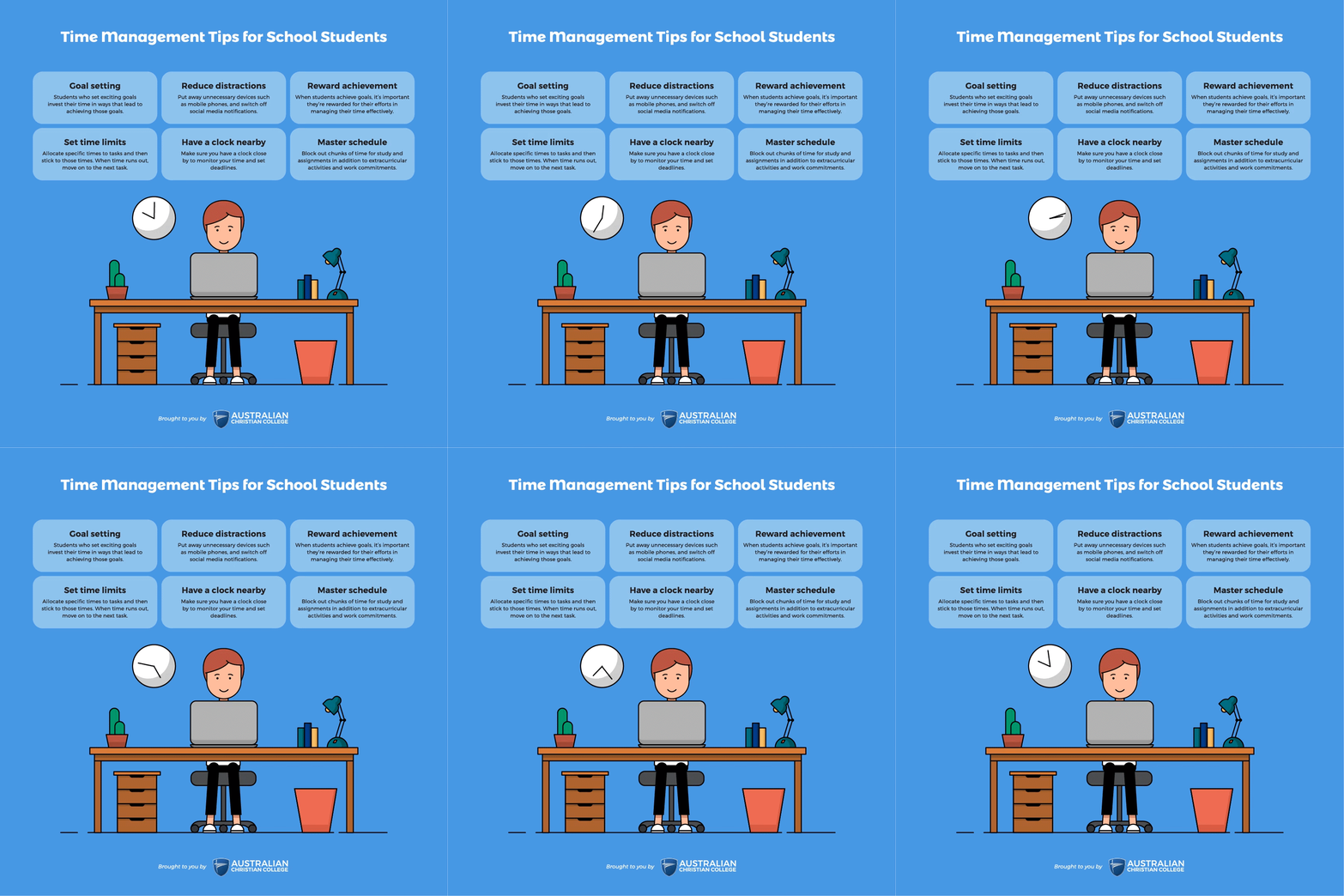
Creating a conducive learning environment is crucial for effective skill acquisition. A well-organized and distraction-free space fosters concentration and enhances the learning process. This section explores strategies for optimizing your learning environment and selecting the right resources to maximize your learning potential.A dedicated learning space, whether a designated corner in your home or a quiet study area in a library, provides a physical boundary between your learning time and other activities.
This separation helps mentally prepare you for focused study. Minimizing distractions, such as noise and interruptions, is equally important. Effective resource selection ensures you utilize materials aligned with your learning style and goals.
Dedicated Learning Space
A dedicated learning space, whether a corner of a room or a separate study area, is a powerful tool for improving focus. It establishes a clear mental association between that space and the activity of learning. This physical separation aids in cognitive shifting, allowing your mind to transition effectively between different tasks. Furthermore, a dedicated space promotes a sense of structure and discipline, which is essential for sustained learning.
Minimizing Distractions and Maximizing Concentration
Minimizing distractions is vital for maintaining focus during learning. This involves identifying and eliminating potential sources of disruption. Techniques such as turning off notifications on your phone, using noise-canceling headphones, or choosing a quiet study environment are beneficial. Furthermore, creating a routine that includes dedicated learning blocks and sticking to it helps establish a strong learning rhythm.
This consistency signals to your brain that specific times are for learning, promoting concentration.
Selecting Appropriate Learning Resources
Selecting the right learning resources is critical for efficient skill acquisition. Resources should align with your learning style, the complexity of the skill, and your existing knowledge base. Using a combination of different formats, such as books, websites, videos, and interactive exercises, can cater to diverse learning preferences.
Potential Learning Resources for [Specific Skill: Data Analysis]
Learning data analysis often benefits from a multi-faceted approach. Here’s a potential list of resources:
- Books: “Data Analysis for Dummies,” “Practical Statistics for Data Scientists,” “Hands-on Machine Learning with Scikit-Learn, Keras & TensorFlow.”
- Websites: Coursera, edX, DataCamp, Kaggle, Towards Data Science (blog).
- Apps: Tableau Public, RStudio, Python IDEs, Excel.
- Mentors: Experienced data analysts, professors specializing in data science, or individuals in related fields.
These resources offer a variety of learning experiences, from theoretical foundations to practical application.
Comparing Learning Environments
Different learning environments offer distinct advantages and disadvantages. The effectiveness of a given environment often depends on individual preferences and the nature of the learning task.
| Learning Environment | Advantages | Disadvantages |
|---|---|---|
| Library | Quiet and conducive to focused study, access to a wide range of resources, opportunity for networking with other learners. | Potential for distractions from other users, limited personal customization of the space. |
| Home | Flexible and adaptable to personal needs and preferences, potentially fewer distractions depending on the home environment. | Potential for distractions from family or household tasks, lack of dedicated study space. |
Ultimately, the most productive learning environment is one that minimizes distractions and maximizes focus, aligning with your individual learning style.
Time Management Techniques for Specific Learning Styles

Effective time management is crucial for successful skill acquisition. Recognizing and adapting learning strategies to individual preferences can significantly enhance the learning process. This section delves into time management techniques tailored for visual, auditory, and kinesthetic learners, highlighting potential challenges and offering solutions. Understanding these nuances can lead to more efficient and enjoyable learning experiences.
Visual Learning Style
Visual learners thrive on visual aids, diagrams, and charts. To maximize their learning potential, visual learners benefit from creating detailed mind maps, using color-coded notes, and employing visual organizers to structure information. Visual representations of concepts, like flowcharts or diagrams, are often more easily retained and understood by this learning style. Utilizing flashcards with visual cues, such as images or icons, can be particularly effective for memorization.
- Creating Visual Timelines: Visual learners can create timelines illustrating their learning progress. This visual representation helps them track deadlines, monitor their learning trajectory, and identify potential bottlenecks.
- Using Color-Coded Calendars and Planners: Color-coding tasks and deadlines on calendars or planners can provide a clear visual representation of commitments, making it easier to manage time and prioritize tasks effectively.
- Visualizing Learning Goals: Visual learners can represent their learning goals with diagrams, charts, or even physical models. This allows them to visualize their progress and stay motivated towards their objectives.
Auditory Learning Style
Auditory learners often learn best through listening to lectures, discussions, or audio recordings. Strategies that cater to their learning style include creating audio summaries of key concepts, using audio reminders for tasks and deadlines, and engaging in study groups for discussions. Auditory learners can find value in listening to educational podcasts or lectures while commuting or completing other tasks.
- Utilizing Audio Recordings: Auditory learners can record their own explanations of concepts or key points. Listening to these recordings can reinforce learning and improve retention.
- Utilizing Audiobooks and Podcasts: Leveraging audiobooks and podcasts can provide an engaging and effective learning experience, particularly for subjects like history or literature.
- Employing Study Groups: Study groups offer opportunities for discussion and clarification, which are valuable for auditory learners who learn best through verbal interaction.
Kinesthetic Learning Style
Kinesthetic learners benefit from hands-on activities, practical exercises, and real-world applications. Their learning style thrives on engaging in simulations, building models, or experimenting with materials. Strategies for kinesthetic learners include incorporating physical movements during study sessions, creating tangible representations of concepts, and seeking opportunities to apply their knowledge in practical scenarios.
- Active Recall Techniques: Kinesthetic learners can use active recall techniques, like teaching the material to someone else or summarizing it in their own words, to reinforce learning.
- Hands-on Activities: Kinesthetic learners can actively participate in hands-on experiments or projects to improve their understanding of complex concepts.
- Practical Application: Seeking opportunities to apply learned skills in real-world situations, whether through internships, projects, or volunteer work, is a valuable strategy for kinesthetic learners.
Challenges and Solutions
Each learning style can face unique challenges in time management. For instance, visual learners might struggle to prioritize tasks if visual representations are not readily available. Auditory learners may find it difficult to focus in noisy environments, whereas kinesthetic learners might struggle with tasks requiring prolonged periods of passive learning. Solutions involve adapting learning environments to support individual preferences, utilizing assistive technologies, and employing strategies that cater to each style.
| Learning Style | Visual | Auditory | Kinesthetic |
|---|---|---|---|
| Advantages of Quiet Environments | High focus, detailed observation | Enhanced listening, clear audio input | Focus on practical activities, hands-on practice |
| Advantages of Collaborative Environments | Different perspectives, shared knowledge | Discussions, feedback, brainstorming | Group projects, shared experiences |
| Disadvantages of Collaborative Environments | Distractions from others | Potential for interruptions or lack of focus | Difficulty with interruptions, focus on other learners |
Incorporating Breaks and Avoiding Burnout
Effective learning requires a well-structured approach that prioritizes both focused study and essential breaks. A balanced schedule, incorporating regular rest periods, significantly enhances retention and prevents the detrimental effects of burnout. This approach fosters a sustainable learning journey, promoting long-term success in acquiring new skills.
Importance of Regular Breaks
Regular breaks are crucial for maintaining optimal cognitive function during skill acquisition. Prolonged periods of focused study can lead to decreased concentration, increased errors, and reduced learning efficiency. Incorporating short breaks allows the mind to rest and recharge, facilitating better information processing and retention. This proactive approach to rest can dramatically improve the overall learning experience.
Strategies for Preventing Burnout
Burnout is a common challenge during periods of intense skill acquisition. To mitigate this, implementing effective strategies is paramount. These strategies focus on creating a balanced routine, incorporating both work and rest, which are critical for sustained motivation and engagement. Strategies include:
- Establishing a consistent schedule that incorporates regular breaks.
- Utilizing time management techniques to optimize study time and allocate dedicated relaxation periods.
- Actively seeking support from peers or mentors to share the learning journey and reduce feelings of isolation.
- Setting realistic goals and avoiding overwhelming oneself with an excessive workload.
Creating a Healthy Learning Routine
A healthy learning routine integrates physical activity and relaxation. Physical activity promotes better blood flow, enhances alertness, and reduces stress. Incorporating activities like a brisk walk, stretching, or a quick workout during breaks can improve focus and reduce mental fatigue. Similarly, dedicated relaxation techniques, such as meditation or deep breathing exercises, can help manage stress and promote mental clarity.
Relationship Between Sleep and Learning Performance
Adequate sleep is essential for optimal learning performance. During sleep, the brain consolidates memories and processes information learned throughout the day. A lack of sufficient sleep can impair cognitive function, reduce concentration, and hinder the ability to retain new information. Aiming for 7-9 hours of quality sleep per night is crucial for maximizing learning potential. Consistent sleep patterns are key to fostering optimal cognitive function and improving the overall learning experience.
Break Activities and Cognitive Function
The following table Artikels various break activities and their potential impact on cognitive function. Different activities can provide diverse benefits, allowing learners to tailor their breaks to their individual needs.
| Break Activity | Impact on Cognitive Function |
|---|---|
| Short walk | Improved blood flow, increased alertness, reduced mental fatigue |
| Stretching or light exercise | Reduced muscle tension, improved focus, increased energy levels |
| Meditation or deep breathing | Reduced stress, improved focus, enhanced mental clarity |
| Listening to calming music | Relaxation, stress reduction, improved mood |
| Social interaction | Improved mood, reduced feelings of isolation, increased motivation |
Tracking Progress and Adapting Strategies

Monitoring progress and adapting learning strategies are crucial for achieving learning goals. Regular assessment of your progress allows you to identify areas of strength and weakness, enabling adjustments to your approach. This iterative process ensures you’re maximizing your learning efficiency and minimizing roadblocks.Effective learning is not a linear path; it often involves adjustments and re-evaluation. Understanding how to track your progress, evaluate the effectiveness of your methods, and adapt your learning schedule is key to sustained success.
This proactive approach fosters a more dynamic and effective learning experience.
Monitoring Progress Towards Learning Goals
Regular progress monitoring helps maintain motivation and identify areas needing improvement. A clear understanding of your learning trajectory is vital. This involves establishing measurable benchmarks against which to track your advancement.
- Establish specific, measurable, achievable, relevant, and time-bound (SMART) goals. These goals should be clearly defined, allowing you to quantify your progress. For example, instead of “learn a new programming language,” a SMART goal might be “learn Python syntax and complete 3 beginner projects within 8 weeks.”
- Utilize a learning journal or log. This tool allows you to record your daily activities, challenges encountered, and any insights gained. Regular reflection in this journal can significantly aid self-assessment and goal adjustments.
- Schedule regular check-ins. Dedicate time for evaluating your progress against your goals. This allows for adjustments and ensures you stay on track. For instance, weekly review sessions can help pinpoint any learning gaps or roadblocks.
Evaluating the Effectiveness of Time Management Techniques
Assessing the effectiveness of different time management strategies is crucial. This involves analyzing how well your techniques support your learning goals and identifying areas for improvement.
- Track the time spent on different learning activities. Analyze the relationship between the time spent and the level of understanding achieved. For example, if you consistently spend more time on one concept without achieving mastery, it might indicate a need to revise your learning approach.
- Evaluate the quality of your learning outcomes. Assess the depth of understanding and application of knowledge gained through different methods. For example, if you’re learning a new software, try applying what you learned to a project or problem. This will provide a more tangible evaluation of your understanding.
- Seek feedback from mentors, peers, or instructors. External perspectives can provide valuable insights into your strengths and weaknesses, and how you’re performing relative to others. This feedback loop can offer valuable suggestions for improvement.
Adjusting the Learning Schedule Based on Performance and Challenges
Adapting your learning schedule based on performance and encountered challenges is essential. This dynamic approach allows you to adjust your learning path to better suit your needs and progress.
- Be flexible and adaptable. Learning environments are not always predictable, and unforeseen challenges may arise. Building flexibility into your schedule allows you to adjust to these changes.
- Prioritize tasks based on your current performance. If a particular topic is proving more difficult than anticipated, dedicate more time to it. Conversely, if a topic is easily grasped, allocate less time to it, freeing up time for other areas.
- Re-evaluate your learning goals periodically. As you progress, your initial goals might need adjustment. Periodic review allows you to reflect on your learning trajectory and adapt your goals to better align with your current needs and progress.
Identifying and Addressing Potential Roadblocks
Identifying and proactively addressing roadblocks in the learning process is crucial for sustained progress. Anticipating potential challenges and developing strategies to overcome them is key.
- Recognize common roadblocks such as lack of motivation, time constraints, or a challenging learning environment. Acknowledge these challenges and plan proactive strategies to address them.
- Seek support from peers, mentors, or online communities. Connecting with others facing similar challenges can offer valuable insights and strategies for overcoming obstacles.
- Develop coping mechanisms to address setbacks. Learning experiences often involve setbacks. Develop coping mechanisms to manage these challenges and maintain motivation.
Tracking Learning Progress Methods Comparison
| Method | Description | Pros | Cons |
|---|---|---|---|
| Learning Journal | Record learning activities, insights, and challenges. | Encourages reflection, aids self-assessment. | Requires discipline for consistent use. |
| Progress Charts | Visual representation of learning milestones. | Motivational, provides clear visualization of progress. | May not capture nuances of learning experience. |
| Learning Apps/Software | Platforms designed for tracking learning progress. | Automated tracking, often includes feedback and resources. | May require subscription or purchase, potentially data security concerns. |
Summary
In conclusion, mastering new skills requires a well-structured approach to time management. By setting clear goals, creating a personalized schedule, optimizing your learning environment, and incorporating breaks and self-care, you can significantly enhance your learning efficiency and achieve your skill acquisition objectives. Remember, consistency and adaptability are key to navigating the challenges and maximizing your learning potential. This guide provides a framework for your success; now it’s your turn to apply these strategies and embark on your learning journey.